

Quick Answer
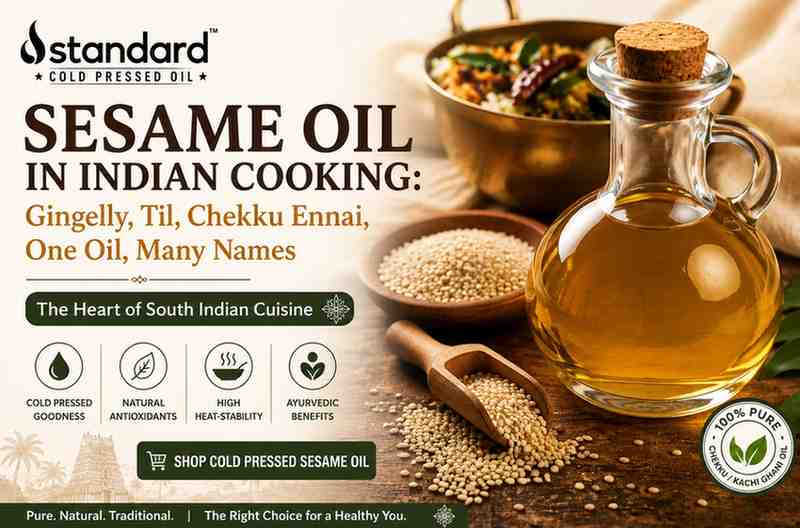
Cold pressed sesame oil (gingelly oil, til oil, chekku ennai) is the primary cooking fat of South Indian cuisine. It carries natural antioxidants called sesamol and sesamin that make it unusually heat-stable. It is used for tempering, frying traditional snacks, and in Ayurvedic body care.
At a Glance
- Smoke point: 160 to 175 degrees Celsius
- Key antioxidants: sesamol, sesamin, sesamolin
- Fatty acid profile: 39% oleic acid, 41% linoleic acid
- Regional names: gingelly oil (South India), til ka tel (Hindi), chekku ennai (Tamil), ganuga nune (Telugu), ellu ennai (Malayalam)
- Best for: South Indian tadka, murukku frying, sesame rice, Ayurvedic massage
The sesame rice exists because of gingelly oil. The warm nuttiness, the way the rice carries a coat of flavour that stays with you, all of it depends on cold pressed white sesame oil.
South India’s relationship with sesame oil runs deeper than cuisine. It is present in the cooking, in traditional medicine, and in the daily rituals of families across Tamil Nadu, Andhra Pradesh, Telangana, and Karnataka.
Sorting Out the Names: Gingelly vs Sesame vs Til vs Chekku Ennai
The naming around sesame oil creates genuine confusion. Here is the full picture.
| Name | Region | Refers To |
|---|---|---|
| Gingelly oil | South India (general) | Cold pressed white sesame oil |
| Chekku ennai | Tamil Nadu | Marachekku (wood-press) extracted sesame oil |
| Mara chekku ennai | Tamil Nadu | Specifically wood-press cold pressed sesame |
| Ganuga nune | Andhra Pradesh / Telangana | Cold pressed sesame or groundnut oil |
| Ellu ennai | Kerala / Tamil Nadu | Sesame oil, til oil |
| Til ka tel | Hindi-speaking North India | White sesame oil (not toasted) |
| Toasted sesame oil | East Asian condiment | Different product entirely, not a cooking oil |
Toasted sesame oil (dark, intensely aromatic) is a finishing condiment in Chinese and Korean cooking. It is not the same as gingelly oil and should not be used as a cooking oil in Indian preparations.
Why Cold Pressed Sesame Oil Is More Heat-Stable Than Expected
Sesame oil is approximately 41 percent linoleic acid (polyunsaturated) and 39 percent oleic acid (monounsaturated).
By fatty acid composition alone, this would make it moderately heat-sensitive. But sesame oil behaves better under heat than those numbers predict.
The reason is sesamol, sesamin, and sesamolin: three lignans released into the oil during cold pressing. These are among the more potent natural antioxidants in any edible oil. They actively protect the oil’s polyunsaturated fatty acids from oxidising at cooking temperatures.
Refining destroys much of this antioxidant system. Cold pressed sesame oil retains it intact.
This natural stability is why South Indian cooks have used gingelly oil for deep frying murukku and sev for generations. The chemistry supports the tradition.
South Indian Cooking and Gingelly Oil
Gingelly oil (chekku ennai or mara chekku ennai in Tamil) is the primary cooking fat of Tamil cuisine the way groundnut oil is for Andhra or mustard oil is for Bengal.
- Sambar and rasam tempering: mustard seeds, curry leaves, and dried red chillies bloom in warm gingelly oil
- Kootu, poriyal, and dry vegetable stir-fries: gingelly oil throughout
- Puliyogare (tamarind rice): gingelly oil as the carrier fat
- Ellu sadam (sesame rice): gingelly oil and sesame seeds together
- Murukku, sev, thattai, vadam: deep fried in gingelly oil at festival time
Andhra and Telangana cooking uses gingelly oil alongside groundnut oil, particularly in pesarattu, chutney preparations, and dal tempering.
Makar Sankranti and the Sesame Connection
Makar Sankranti in mid-January marks the sesame harvest celebration across India.
In Tamil Nadu, the festival is Thai Pongal. Newly harvested sesame seeds are pressed for fresh gingelly oil. The first press of a new season is a notable moment in communities with traditional pressing practices.
The festival food uses sesame in multiple forms: til ke ladoo (sesame and jaggery balls), til chikki, ellu sadam. The crop, the festival, and the cooking are genuinely intertwined.
Ayurvedic Use: The Cooking and Care Connection
Sesame oil occupies a central position in Ayurvedic practice. The classical Charaka Samhita describes tila taila (sesame oil) as the best among oils for external application.
Abhyanga (warm oil self-massage), Nasya (nasal application), and Gandusha (oil pulling) all traditionally use sesame oil as the primary medium.
South Indian families historically used the same food-grade cold pressed gingelly oil for cooking and for daily oil massage, particularly for children. One oil, two applications.
We note this as cultural context, not as a health claim.
Cold Pressed vs Refined Sesame Oil: The Key Difference
| Property | Cold Pressed Gingelly | Refined Sesame Oil |
|---|---|---|
| Colour | Pale golden | Nearly colourless |
| Smell | Warm, nutty | Odourless |
| Sesamol / Sesamin | Present, natural antioxidant system intact | Largely removed by refining |
| Heat stability | Good, supported by natural antioxidants | Lower, relies on added antioxidants |
| Best for | South Indian cooking, frying snacks, body care | Generic use, no flavour required |
| We press our sesame oil cold, so the sesamol and sesamin content stays where nature put it. |
Related Reading
- Which Oil Is Best for Indian Cooking? [Blog 6]
- Smoke Points of Common Cooking Oils [Blog 8]
- Using Cold Pressed Sesame Oil for Hair and Skin [Blog 14]
Frequently Asked Questions
What is gingelly oil?
Gingelly oil is cold pressed white sesame oil, the primary cooking fat of South Indian cuisine. It is made from raw, untoasted white sesame seeds and has a pale golden colour and mild nutty aroma. It is not the same as dark toasted sesame oil used in East Asian cooking.
Is chekku ennai the same as sesame oil?
Yes. Chekku ennai means sesame oil pressed on a chekku (traditional Tamil wooden press). Mara chekku ennai specifically refers to wood-press extracted sesame oil. It is the same seed as gingelly oil, pressed using the traditional Tamil kachi ghani-equivalent method.
Can gingelly oil be used for deep frying?
Yes. Cold pressed gingelly oil has a smoke point of 160 to 175 degrees Celsius and contains natural antioxidants (sesamol, sesamin) that protect it during frying. South Indian families have used it for frying murukku, sev, and vadai for generations.
What is the difference between til oil and sesame oil?
There is no difference. Til is the Hindi word for sesame seeds. Til ka tel and sesame oil refer to the same product: cold pressed white sesame oil. The confusion sometimes arises because toasted sesame oil looks and smells very different, but that is a separate product.
Is gingelly oil good for hair?
Gingelly oil has been used in Ayurvedic hair care for centuries. Cold pressed sesame oil contains oleic and linoleic acid, both present in skin and hair’s natural lipid structure, along with sesamol. The traditional practice uses food-grade cold pressed gingelly oil directly on the scalp.
Why does cold pressed sesame oil have better heat stability than refined?
Because of its natural antioxidant lignan content: sesamol, sesamin, and sesamolin. These survive cold pressing and protect the oil’s polyunsaturated fatty acids from oxidising at cooking temperatures. Refining removes most of this antioxidant system.
