



You browse an oil brand’s website. One says ‘cold pressed’. Another says ‘wood pressed’. A third says ‘kachi ghani extracted’. A fourth says ‘expeller cold pressed’. If you have tried to compare these on a single afternoon, you know how confusing the terminology gets.
These terms are related but not identical. They describe different equipment, different speeds, and, most importantly, different temperatures during extraction. Here is what each actually means and why it matters for the oil in your bottle.
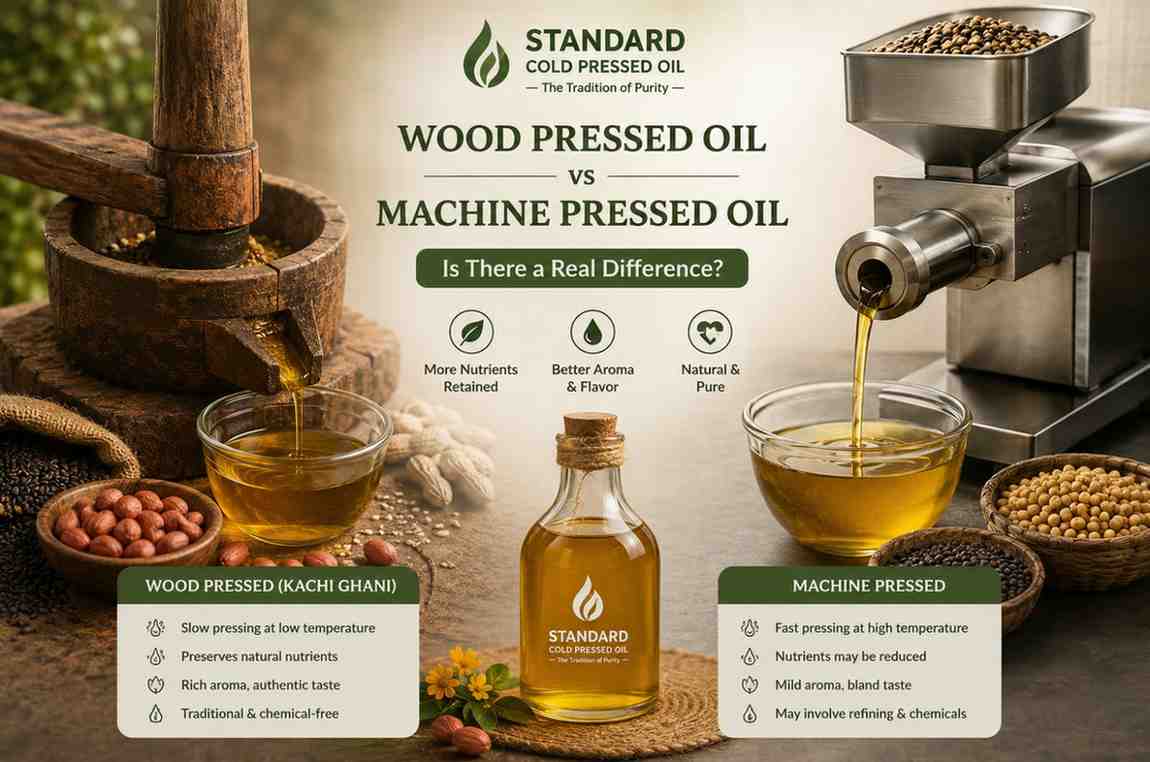
What a Traditional Wood Press (Kachi Ghani) Actually Does
The traditional kachi ghani is a wooden press, a central wooden shaft rotated within a conical wooden or stone mortar. The rotation is slow. In the original version, an ox walked in circles to power the press. In modern artisanal setups, a motor drives the same wooden mechanism at comparably low RPM. The oil flow is slow, the contact surfaces are wood, and the entire apparatus is designed around patience rather than throughput.
That slowness is the whole point. At low rotational speed, the friction between the seed and the press surfaces stays minimal. Friction generates heat. Minimal friction means minimal heat. Well-documented traditional kachi ghani operations run at below 40°C during extraction, well below the threshold at which heat-sensitive compounds in seed oil begin to degrade.
At 40°C, the volatile aroma compounds, the allyl isothiocyanate that gives mustard oil its sharpness, the sesamol that gives sesame oil its characteristic warmth, stay in the oil. The tocopherols (natural Vitamin E) remain structurally intact. The polyphenols that contribute both flavour complexity and natural oxidative stability stay put.
The oil that comes out of a kachi ghani press is thick, deeply coloured, fragrant, and unambiguous about what seed it came from.
What Modern Machine Cold Pressing Means
The ‘cold pressed’ label in a modern industrial context refers specifically to keeping extraction temperature below 49°C (some European standards say 27°C for olive oil, but Indian standards are less prescriptive). Achieving this in a machine press requires deliberate speed control, running the press slowly enough that friction heat stays within range.
A steel expeller press running at controlled low speeds can genuinely produce cold pressed oil. Some producers do exactly this, with temperature monitoring and careful batch management. Others are less rigorous. The steel press itself conducts and retains heat differently than wood, steel is a better heat conductor than wood, which means heat dissipates faster but can also transfer more directly into the oil.
The practical difference: a well-managed machine cold press will produce oil at 45–49°C. A traditional wood press will produce oil at 37–43°C. That 6–12°C gap matters specifically for the most heat-sensitive volatile compounds, the ones that give the oil its distinctive smell and flavour.
How to Tell the Difference in the Finished Oil
If you have tasted both, you will know. Wood-pressed groundnut oil has a rounder, deeper, more recognisably nutty flavour than machine-cold-pressed groundnut oil from the same seed variety. The difference is not dramatic, both are genuinely cold pressed, genuinely unrefined, and genuinely superior to refined oil. But the wood-pressed version carries a slightly richer sensory character.
The same applies to sesame oil. Cold pressed gingelly (white sesame) oil extracted in a kachi ghani has an aroma depth that machine extraction at the upper end of the cold press range tends to lose partially. South Indian families who have used chekku (the Tamil/Telugu equivalent of the kachi ghani) for generations recognise this difference immediately.
With mustard oil, the difference is particularly noticeable. The sharp, sinus-clearing pungency of kachi ghani mustard oil, which comes from the volatile glucosinolate breakdown products, is more pronounced than in machine-cold-pressed versions. If a mustard oil seems relatively mild, it was likely pressed at the warmer end of the cold press spectrum or possibly not cold pressed at all.
The Commercial Reality: Why Wood Pressing Is Rare
Wood pressing is slow. A traditional kachi ghani press with a motor produces roughly 10–15 litres of oil per hour. A mid-size steel cold press produces 80–150 litres per hour. For commercial scale, the economics of wood pressing only work for small-to-mid producers who are willing to charge, and find buyers willing to pay, a premium for the process.
This is why most brands that say ‘cold pressed’ are using well-managed steel presses, not wooden ghanis. It does not make them dishonest, if the temperature is maintained below 49°C and no chemicals are used, the cold pressed claim is legitimate. But it is not the same as true kachi ghani extraction, and genuinely discerning buyers deserve to know the difference.
What to Ask When You Are Buying
When a brand claims ‘wood pressed’ or ‘kachi ghani’, these are the questions worth asking:
- What is the actual extraction temperature? Brands that monitor this will tell you. Those that do not may not know.
- Is the press mechanism genuinely wooden, or is ‘kachi ghani’ being used as a marketing term for any slow-press cold extraction?
- What is the yield per kilogram of seed? Lower yield (350–400 ml per kg for groundnut) suggests genuinely slow cold pressing rather than maximised extraction.
- How quickly does the oil go rancid? Genuine wood-pressed oil with its full natural antioxidant load typically lasts 9–12 months if stored correctly. Shorter is suspicious; much longer suggests additives.
At Standard Cold Pressed Oil, we use traditional wood presses for our oils. The yield is lower, the process is slower, and the oil costs more per litre, but it is the real thing.
| Our wood-pressed groundnut oil and sesame oil are extracted on traditional kachi ghani presses. Taste the difference that method makes.standardcoldpressedoil.com/cold-pressed-groundnut-oil |
Related Reading
- Kachi Ghani Oil: The Traditional Indian Method Still Worth Using
- Cold Pressed vs Refined Oil: What Actually Changes in the Process
- How to Read an Edible Oil Label in India: What the Terms Mean
