



If you are making a Tamil Nadu-style biryani such as Ambur or Dindigul, choose seeraga samba. If you want long, separate grains for a North Indian biryani or pulao, choose basmati. For everyday rice with sambar, rasam, kuzhambu and curd, ponni is the practical, affordable choice. The three behave very differently in the pot, and most cooking disappointments come from using one where another was intended.
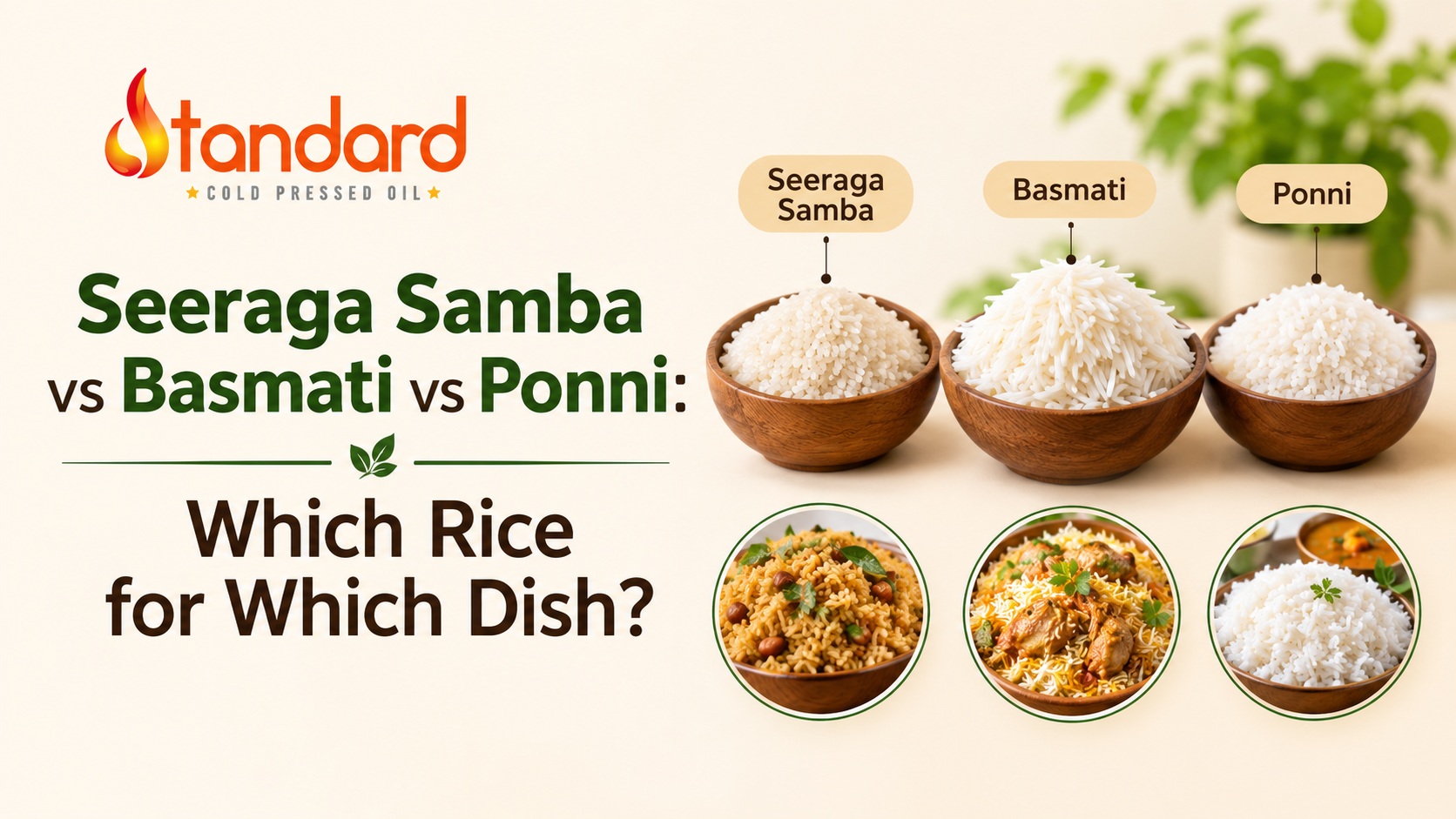
Seeraga Samba vs Basmati vs Ponni Rice: The quick comparison
| Seeraga samba | Basmati | Ponni | |
|---|---|---|---|
| Grain | Very small and oval, like cumin (seeragam) | Long and slender, lengthens a lot when cooked | Medium grain |
| Where it grows | Cauvery delta of Tamil Nadu | Indo-Gangetic plains of North India and Pakistan | Developed in Tamil Nadu, grown across the South |
| Aroma | Distinct, sweet, earthy | Floral, strong | Mild |
| Cooked texture | Firm grains that soak up masala | Fluffy, separate, elongated | Soft, slightly sticky |
| Typical use | Ambur, Dindigul, Chettinad biryani; ghee rice | Hyderabadi, Lucknowi, Punjabi biryani; pulao; jeera rice | Daily meals, curd rice, pongal |
| Relative price | Usually the highest of the three | Mid to high, by grade and ageing | Most affordable |
Seeraga samba: the biryani rice of Tamil Nadu
The name comes from seeragam, the Tamil word for cumin, because the grain is small and oval like a cumin seed. Samba refers to the long samba cropping season. The TNAU Agritech Portal lists seeraga samba as a traditional variety grown in Nagapattinam district that takes around 125 to 130 days to mature and is used for biryani on special occasions. Slow Food’s Ark of Taste records it as a traditional rice under pressure from higher-yielding crops, with cultivation concentrated in parts of Nagapattinam, Tiruchirappalli and Thanjavur districts.
What makes it special in biryani is how it takes on flavour. The small grains absorb spiced stock, ghee and the juices of meat or vegetables, so every mouthful carries the masala. Basmati keeps more of the flavour on its surface. That difference is why Tamil biryani houses are so particular about their rice.
How to cook it. Rinse gently two or three times and soak for 20 to 30 minutes. For biryani, roughly 1 cup of rice to 1.5 to 1.75 cups of liquid works for most pressure cooker and pot methods. Seeraga samba overcooks quickly, so use slightly less water the first time and adjust. Ghee or gingelly oil in the tempering suits its flavour.
Our seeraga samba rice comes in household packs if you want to try a Tamil-style biryani at home.
Basmati: long grains and floral aroma
Basmati is the rice most of India pictures for biryani. Its grains lengthen considerably and stay separate and fluffy, which suits dum biryani, where rice and meat cook together in layers, and pulao, where each grain should stand apart. Aged basmati cooks drier and longer than fresh crop. It needs more water than seeraga samba and benefits from a longer soak, often 30 minutes or more.
Standard Cold Pressed Oil does not currently sell basmati. It is in this comparison because it is the rice people most often weigh against seeraga samba.
Ponni: the everyday rice of South India
Ponni is a medium grain rice developed in Tamil Nadu and now grown widely across the South. It is soft, gentle in flavour, and easy to pair, which makes it the background rice for sambar, rasam, kootu, poriyal and curd rice. It is often sold as parboiled (boiled) rice, which is partly cooked in the husk before milling. Parboiling moves some nutrients from the bran into the grain and gives a firmer, less sticky cooked rice.
Ponni struggles in biryani. Its softer texture turns mushy under heavy masala and long cooking, so keep it for daily meals. You can find ponni boiled rice in our rice range.
Which rice for which dish
- Ambur, Vaniyambadi, Dindigul and Chettinad biryani: seeraga samba
- Hyderabadi, Lucknowi, Kolkata and Punjabi biryani: basmati
- Ghee rice, coconut milk pulao: seeraga samba
- Jeera rice, peas pulao, fried rice: basmati
- Tamarind, lemon or coconut rice: seeraga samba for a festive version, ponni for everyday
- Sambar rice, rasam rice, curd rice, pongal: ponni
- Kanji and porridge: ponni or other traditional rices such as matta
If you are exploring traditional South Indian rices further, our pieces on samba rice, mappillai samba rice and matta rice cover three more varieties.
Is seeraga samba healthier than basmati?
This is one of the most common questions in search. Both are polished white rices with broadly similar calories and carbohydrates per serving. How your body responds depends on the variety, processing, cooking time and what you eat with the rice, and claims that one white rice is dramatically healthier than another are usually overstated. Choose the rice for the dish, keep portions sensible, and pair rice with dal, vegetables and protein. If you want more fibre, unpolished and traditional red rices are worth adding to your rotation.
Why seeraga samba costs more
Seeraga samba usually costs more than ponni and often more than many basmati grades. It grows in a limited region, takes a long season, yields less per acre than modern high-yielding varieties, and has steady demand from restaurants and families across Tamil Nadu. Prices also move with each harvest, so check the current price on the product page.
Frequently asked questions
Can I use basmati instead of seeraga samba for Ambur biryani?
You can, and many people do, though the result will taste and feel different. Seeraga samba gives smaller grains that absorb the masala. Basmati gives longer, drier grains with the flavour sitting more on the outside.
Is jeera samba rice the same as seeraga samba?
Yes. Jeera, jeeraga, and seeraga all refer to cumin, so jeera samba and seeraga samba are the same variety.
How much water does seeraga samba need?
Start with about 1.5 to 1.75 cups of liquid per cup of soaked rice for biryani and adjust after your first attempt. It needs less water than basmati.
Can you use ponni rice for biryani?
It is not ideal. Ponni turns soft under long cooking with heavy masala and is best for everyday meals.
Which rice is best for daily use?
For most South Indian households, ponni or another medium-grain rice is the practical daily choice. Seeraga samba and basmati are usually kept for biryani and festive cooking.
Planning a biryani? Choose seeraga samba rice for a Tamil-style biryani, or browse our full range, from ponni to traditional red rice.
