



Palm jaggery vs palm candy (karupatti and panam kalkandu) both come from the sap of the palmyra palm, and that is where the similarity ends. Palm jaggery is the sap boiled down until it thickens and is set in moulds, so it is dark, soft-crumbly and full of caramel and smoky notes. Palm candy is the sap boiled to a particular point and then left to crystallise slowly, so it forms hard, pale, glassy crystals with a cleaner, milder sweetness. Use jaggery when you want depth of flavour in sweets, payasam or coffee, and palm candy when you want something that dissolves slowly into warm milk or is eaten in small pieces.
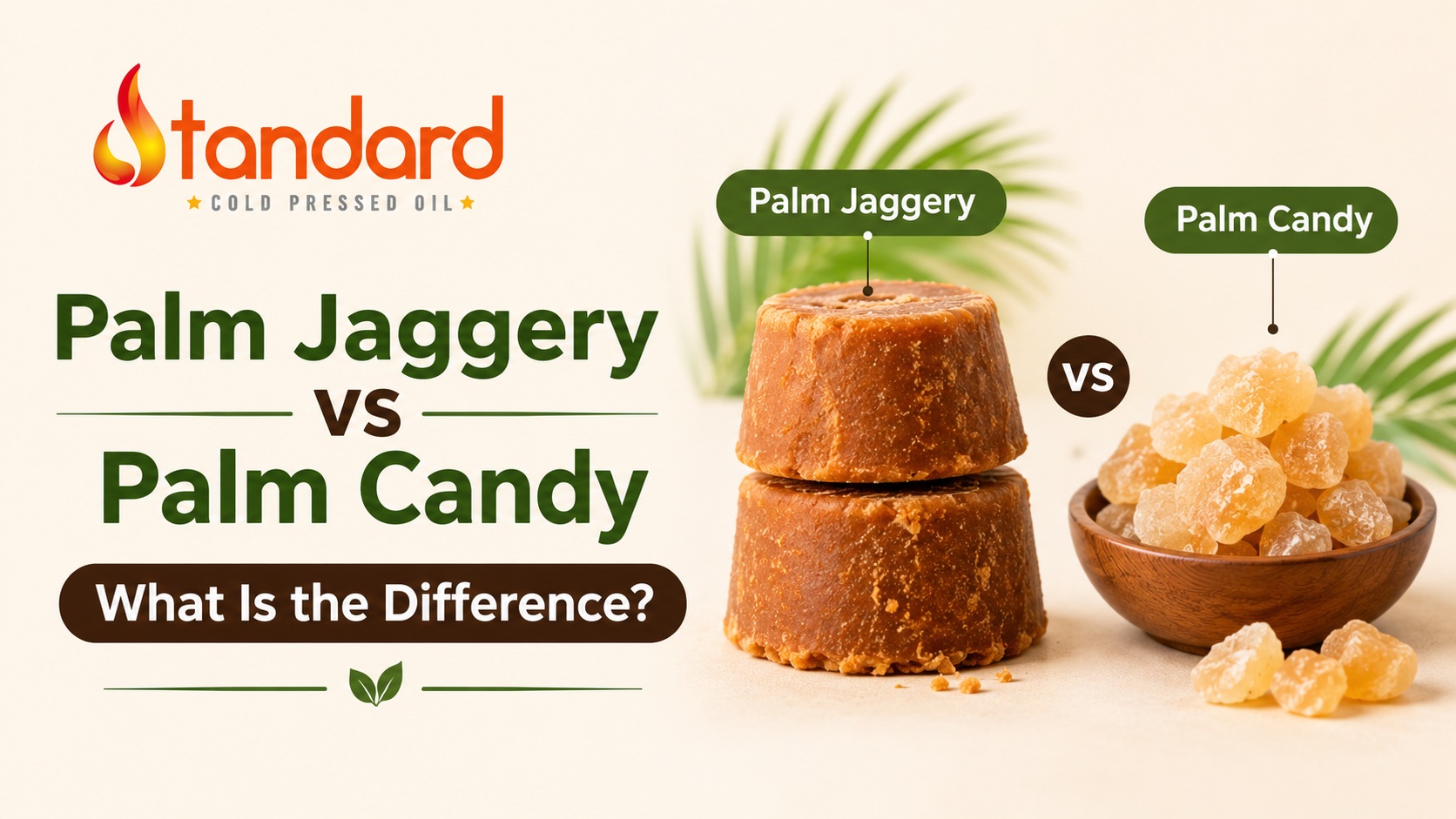
Palm Jaggery vs Palm Candy: Same tree, same sap
Both products start with the palmyra palm, Borassus flabellifer, the state tree of Tamil Nadu. Tappers climb the palm and collect sap from the flower clusters, usually early in the morning before the day warms up. This sweet sap is called padaneer in Tamil and neera elsewhere in India. It begins to ferment within hours at room temperature, so producers treat it with a little lime (calcium hydroxide) to slow fermentation and start boiling it quickly.
Most of Tamil Nadu’s palm products come from the southern districts, with Thoothukudi accounting for the bulk of the state’s production according to a recent study of the region’s cottage industry. Much of it is still made in small household units.
From here, the sap can go two ways.
How palm jaggery (karupatti) is made
For jaggery, the sap is filtered and boiled in wide pans, stirred constantly, until most of the water evaporates and it turns into a thick, dark syrup. That syrup is poured into moulds, traditionally halved coconut shells, which is why karupatti often has its rounded dome shape. As it cools, it sets into a firm block.
Because all of the sap’s solids stay in the block, karupatti carries the deep colour and complex taste that comes from long boiling: caramel, a slight smokiness, and sometimes a mineral, almost salty edge.
How palm candy (panam kalkandu) is made
Palm candy takes patience. The sap is boiled to a lower, carefully judged point, then poured into vessels that are covered and left undisturbed, traditionally for weeks to months. Over that time, sugar crystals grow slowly out of the syrup. The crystals are then separated, washed of the remaining syrup and dried.
The slow crystallisation leaves much of the colour and flavour behind in the syrup, which is why palm candy is lighter in colour and gentler in taste than jaggery. The long production time and lower yield also explain why palm candy usually costs more per gram.
Side by side
| Palm jaggery (karupatti) | Palm candy (panam kalkandu) | |
|---|---|---|
| Process | Sap boiled down and set in moulds | Sap boiled, then crystallised slowly over weeks |
| Look | Dark brown, dome or block | Pale amber to light brown crystals |
| Texture | Firm but grates or crumbles | Hard, glassy |
| Taste | Deep, caramel, slightly smoky | Mild, clean sweetness |
| Dissolves | Quickly in hot liquids | Slowly |
| Typical uses | Payasam, sweets, coffee, tea, chikki, kozhukattai filling | Warm milk, chewed in small pieces, traditional home remedies for throat comfort |
| Price | Lower | Higher |
How each is used in the kitchen
Palm jaggery works almost anywhere you would use cane jaggery. Grate or melt it for paruppu payasam, adhirasam, ellu urundai, karupatti coffee and sweet pongal. Its strong flavour stands up to cardamom, dry ginger and coconut. Melt it in a little water and strain before use, since traditional karupatti can contain fine particles.
Palm candy is commonly dissolved in warm milk (panakarkandu paal) or kept in the kitchen to be eaten a piece at a time. Many South Indian households reach for it with warm milk and pepper when someone’s throat feels scratchy. That is a comforting tradition, and it is best treated as a home custom. Palm candy is still a sugar.
Are they healthier than white sugar?
This is the question behind most “benefits” searches, so here is the honest answer. Both palm jaggery and palm candy are sugars, made mostly of sucrose. Palm jaggery keeps small amounts of the minerals naturally present in the sap because nothing is removed during boiling. Those amounts are modest at the quantities people actually eat, so they do not turn a sweetener into a health food.
What they do offer is flavour and minimal processing. If you are swapping white sugar for palm jaggery because you prefer a less processed, traditional sweetener with more taste, that is a reasonable choice. The ICMR-NIN Dietary Guidelines for Indians advise limiting added sugars of every kind, and that applies to palm sugars too. Our existing guide to palm candy covers its traditional uses in more detail, and nattu sakkarai is another unrefined option made from sugarcane.
Buying tips: spotting the real thing
Palm products are prone to adulteration with cane sugar, which is cheaper. A few checks help:
- Taste. Genuine karupatti has a distinctly different, slightly smoky and mineral taste compared with cane jaggery. A flat, plain sweetness can suggest a cane sugar blend.
- Colour. Real karupatti is deep brown to nearly black. Very light, uniform blocks deserve a closer look.
- Price. Palm products cost more than cane jaggery because tapping is skilled, seasonal work. A price far below the market is a warning sign.
- Palm candy crystals should be irregular and slightly cloudy or amber. Perfectly uniform, glass-clear crystals look more like ordinary sugar candy (kalkandu).
Storage
Keep both in airtight jars in a cool, dry place. Palm jaggery absorbs moisture and can turn sticky in humid weather, so close the lid tightly and use a dry spoon. Palm candy keeps for a long time if kept dry.
Frequently asked questions
Is karupatti the same as palm jaggery?
Yes. Karupatti is the Tamil name for palm jaggery made from palmyra sap. Panai vellam is another name used in some regions.
Is palm candy the same as kalkandu?
Kalkandu is the general Tamil word for sugar candy, which is commonly made from cane sugar. Panam kalkandu specifically means palm candy made from palmyra sap.
Can I use palm candy instead of palm jaggery in recipes?
You can for drinks and light sweets, though it dissolves slowly and gives a milder flavour. For payasam and traditional sweets, palm jaggery gives the expected taste and colour.
Which is better for coffee or tea?
Palm jaggery dissolves faster and gives karupatti coffee its signature flavour. Palm candy works too if you stir longer and prefer a lighter taste.
Why is palm candy so expensive?
It takes weeks to crystallise, yields less product from the same sap, and depends on skilled seasonal tapping.
Stock up on traditional sweeteners. Explore our palm jaggery and palm candy, or browse the full jaggery range.
