



Quick Answer
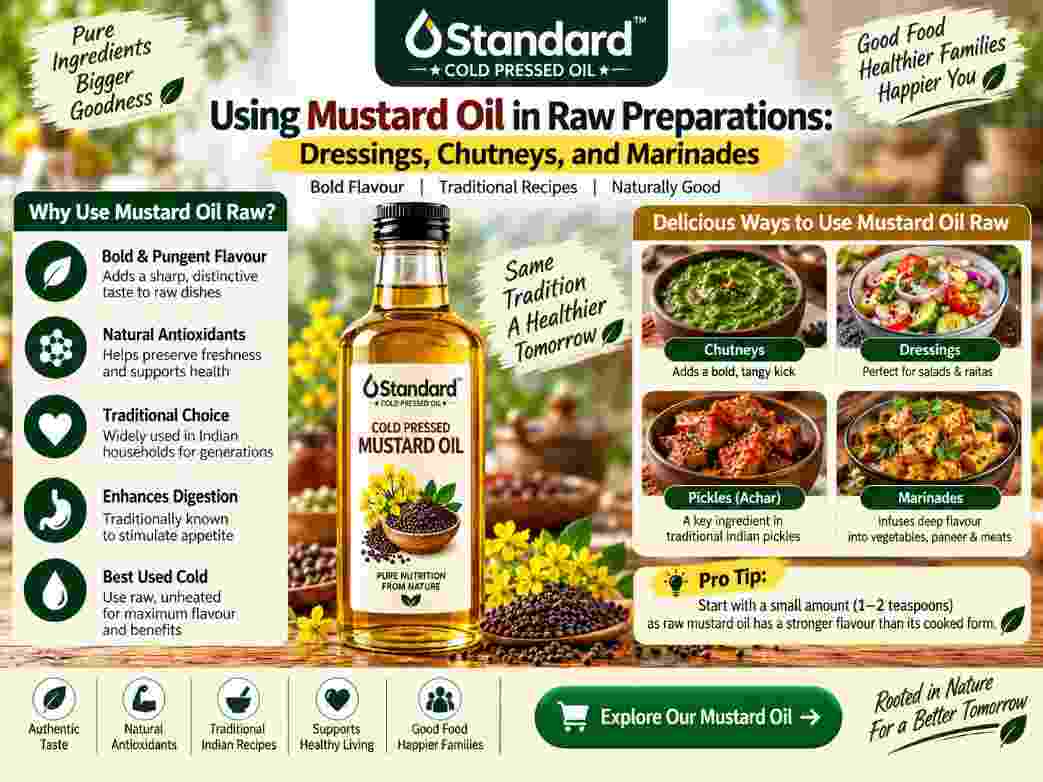
Raw cold pressed mustard oil is used uncooked in dressings, chutneys, and marinades across North and East India specifically for its sharp, pungent bite, a flavour that softens once the oil is heated. Use a small amount, a teaspoon or two is usually enough, and taste as you go since raw mustard oil is far more intense than its cooked form.
At a Glance
- Raw mustard oil’s sharpness comes from allyl isothiocyanate, a compound that forms only when the seed is crushed, and heat softens it significantly
- Used raw in Bihari chokha, Bengali salads and chutneys, North Indian achar, and yoghurt-based dressings
- A little goes a long way, start with less than a recipe seems to call for and adjust upward
- First-time tasters often find raw mustard oil too intense on its own, it is designed to be balanced against acid, salt, or other fats, not eaten alone
- Always use cold pressed mustard oil for raw applications, refined mustard oil lacks the sharpness the dish is built around
Ask someone from Bihar what makes a good chokha and the answer usually is not about the vegetable, whether it is the roasted brinjal or the boiled potato. It is about the mustard oil poured in right at the end, raw, uncooked, and unapologetically sharp.
This is a different use of mustard oil than the tempering most people know, where the oil is heated until it smokes lightly before spices go in. Used raw, mustard oil is not a cooking medium at all, it is closer to a finishing ingredient, the way a good olive oil is drizzled over a dish rather than cooked into it.
Here is how raw mustard oil is actually used across the households that rely on it, and how to bring it into your own kitchen without overdoing it.
Why Raw Mustard Oil Tastes So Different From Cooked
Mustard seeds contain compounds called glucosinolates, which are odourless and flavourless on their own. When the seed is crushed during cold pressing, an enzyme called myrosinase, stored separately in the seed, comes into contact with the glucosinolates and converts them into allyl isothiocyanate, the compound responsible for mustard oil’s sharp, sinus-clearing bite.
This compound is volatile, meaning it breaks down and partly evaporates with heat. That is why tempering mustard oil until it smokes mellows its sharpness into a deeper, rounder flavour, while using it raw preserves the full intensity. Neither use is a mistake. They are different techniques suited to different dishes, and traditional cooking across mustard-oil regions makes deliberate use of both.
Where Raw Mustard Oil Shows Up
Bihari Chokha
Roasted or boiled vegetables, most commonly brinjal, potato, or tomato, are mashed with green chilli, onion, garlic, and salt, then finished with a generous pour of raw mustard oil right before serving. The oil is never cooked into chokha. Its sharpness is meant to hit you as you eat, cutting through the smokiness of the roasted vegetable.
North Indian Achar
Most North Indian pickles, mango, lime, mixed vegetable, use raw mustard oil as both preservative and flavour base. The oil is added cold, and the pickle is left to mature over weeks, during which the mustard oil’s sharpness mellows slightly and blends with the spices rather than disappearing.
Bengali and Odia Salads and Chutneys
Raw vegetable salads known as shukto-adjacent preparations, and mashed chutneys made from tomato, mango, or even fish, are often finished with a spoon of raw mustard oil and green chilli. The technique is similar to chokha, a small amount of raw oil added at the very end rather than cooked in.
Yoghurt and Curd-Based Dressings
A less well known but common use is whisking a small amount of raw mustard oil into curd along with salt and roasted cumin, used as a dressing over sliced cucumber or as a dip. The fat in the yoghurt tempers the oil’s sharpness while still carrying its flavour.
If your first taste of raw mustard oil makes your eyes water, that is not a sign something is wrong. It means the oil is genuinely cold pressed and unrefined.
How Much to Use
Raw mustard oil is far more concentrated in flavour than cooked oil, and new users tend to either avoid it entirely after one overwhelming try, or pour it as generously as they would a neutral cooking oil.
- For a chokha or mashed vegetable dish serving three to four people: one to two teaspoons is usually enough
- For a curd dressing for one bowl: half a teaspoon, whisked in well
- For a marinade on fish or vegetables before roasting: one tablespoon per 250 to 300 grams, combined with turmeric and salt
Taste before adding more. Unlike a neutral oil, mustard oil’s flavour does not fade quickly on the palate, so it is easier to undershoot and add more than to walk back an overpoured dish.
Using Raw Mustard Oil in Marinades
Fish marinated in raw mustard oil is common across Bengal, Bihar, and Odisha, particularly for river fish that benefit from a strong flavour to cut through their richness.
The oil is rubbed directly onto the fish along with turmeric, salt, and sometimes a little chilli powder, then left to sit for twenty to thirty minutes before cooking. Allyl isothiocyanate has mild antimicrobial properties, which is part of why this combination has stayed traditional for fish preparation specifically, on top of the flavour it contributes.
For vegetables, a shorter marinade, ten to fifteen minutes, before grilling or roasting works well with produce that can handle a strong flavour: eggplant, potato, and paneer all take well to it.
A Common Mistake
Tasting raw mustard oil straight from the spoon and deciding it is too sharp to use is the most common reason people give up on it before they have actually cooked with it in context.
Raw mustard oil is not designed to be eaten alone, the same way you would not eat a spoonful of vinegar and judge a vinaigrette by it. It is built to be balanced against salt, acid, the smokiness of a roasted vegetable, or the fat of curd. Try it in an actual dish, in the small quantities described above, before deciding it is not for you.
| Our cold pressed mustard oil is extracted on a traditional wooden ghani, the sharpness that raw preparations like chokha and achar are built around. |
Related Reading
- Mustard Oil in Indian Cooking: Uses, Flavour, and the Science Behind That Sharpness
- Kachi Ghani Oil: The Traditional Indian Method Still Worth Using
- 10 Common Mistakes People Make When Switching to Cold Pressed Oil
Frequently Asked Questions
Is it safe to eat mustard oil raw, without cooking it at all?
Yes. Raw mustard oil is a normal part of North and East Indian cooking, used in chokha, achar, and chutneys for generations. It should be cold pressed and unrefined for these uses, since that is the form these dishes were developed around.
Why does raw mustard oil taste so much sharper than the mustard oil I use for tempering?
Heat breaks down and partly evaporates allyl isothiocyanate, the compound responsible for mustard oil’s pungency. Tempered mustard oil has already lost much of that sharpness to the heat, while raw mustard oil retains it in full.
Can I substitute a milder oil if raw mustard oil is too strong for me?
You can, but the dish will taste noticeably different, since mustard oil’s sharpness is often the defining flavour in these preparations rather than an incidental ingredient. A better first step is reducing the quantity of mustard oil rather than replacing it entirely.
Does raw mustard oil go bad faster than cooked or tempered mustard oil?
No, the oil’s shelf life depends on storage, light, heat, and air exposure, not on whether it has been heated before use. The same storage guidance, cool, dark, tightly sealed, applies whether you use it raw or cooked.
Is raw mustard oil suitable for babies or very young children?
Raw mustard oil’s intensity is generally considered too strong for very young palates, and many families introduce it in cooked, tempered form first. If you have specific questions about introducing mustard oil to a baby or toddler’s diet, it is best to consult your paediatrician.
