



Quick Answer
Cold pressed sesame oil is the traditional base for pickles and marinades across South and East India because its natural antioxidants slow spoilage, and its raw flavour, nutty and slightly sharp, deepens as the pickle matures. Use raw, unheated sesame oil for pickling, and always keep the vegetables or fruit fully submerged.
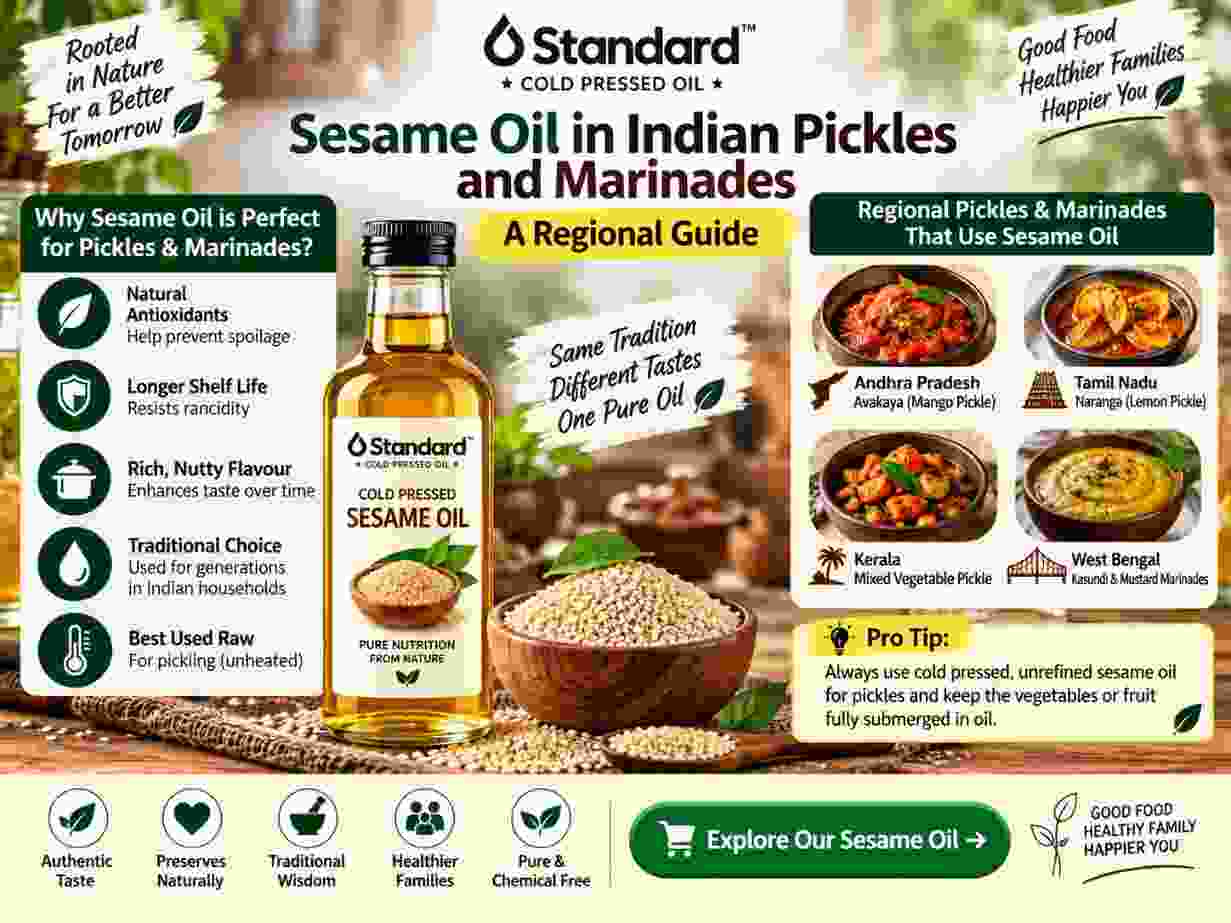
At a Glance
- Sesame oil is used raw in pickling, never heated first, unlike its use in everyday tempering
- Natural antioxidants sesamol and sesamin help resist rancidity, which matters when a pickle sits for weeks or months
- Andhra avakaya, Tamil Nadu’s naranga achar and vadu manga, and Kerala’s mixed pickles all lean on sesame oil as the preserving layer
- A visible oil layer on top of a jar is doing a job, not just sitting there, it blocks air and slows mould
- For marinades, sesame oil carries spice flavours into meat and vegetables better than a neutral oil because it has flavour of its own to contribute
Walk into most South Indian kitchens during pickle season and you will find the same scene: cut mangoes or lemons salted and drying in the sun, a mound of red chilli powder waiting, and a bottle of sesame oil set aside specifically for this job, not the everyday cooking bottle.
That separation is not accidental. Pickling asks something different of oil than sautéing does, and sesame oil has quietly been the answer for generations before anyone wrote down why it works.
Here is what is actually happening inside the jar, and how to use sesame oil the way people who have been making pickles for decades do.
Why Sesame Oil Specifically
Sesame oil contains two natural antioxidant compounds, sesamol and sesamin, that are not found in most other cooking oils in comparable amounts. These compounds slow oxidation, the same process that makes any oil eventually turn rancid. In a pickle, where oil is expected to sit at room temperature for weeks or months, sometimes touching salt, chilli, and moisture from the vegetable, that resistance to oxidation is doing real work.
Cold pressed sesame oil also has a distinct nutty, slightly toasty flavour even before it is heated, which most refined and neutral oils lack entirely. In a pickle, where the oil is a flavour ingredient and not just a cooking medium, that matters as much as the preservation.
The Job the Oil Layer Is Doing
If you have ever opened a jar of homemade pickle and seen a layer of oil sitting on top, that layer is not decorative.
Oil is denser at blocking air than it looks. A generous top layer of sesame oil physically separates the pickled vegetable from oxygen, which slows both oxidation of the oil itself and the growth of mould, which needs air to establish on a surface. This is why traditional pickle recipes are often generous with oil, sometimes more than a modern cook expects, and why “topping up” the oil layer after removing pickle from the jar is a standard piece of grandmother-level advice, not a wasteful habit.
Regional Pickles Built on Sesame Oil
Andhra and Telangana: Avakaya
Avakaya, the Andhra mango pickle, is possibly the most famous sesame-oil-based pickle in India. Raw green mango is cut into pieces, coated in red chilli powder, mustard powder, fenugreek, and salt, then submerged in raw sesame oil for weeks before it is considered ready. The oil is never heated for this recipe. It is added cold, directly from the bottle, and the pickle matures slowly as the spices and mango release their liquid into it.
Tamil Nadu: Naranga Achar and Vadu Manga
Lemon pickle, or naranga achar, and vadu manga, tender baby mango pickle, both rely on sesame oil the same way. In many Tamil households the oil is lightly warmed and cooled before use, just enough to help the spices bind, rather than being used fully raw or fully cooked. The result sits between avakaya’s fully raw approach and a tempered pickle.
Kerala: Mixed Vegetable and Fish Pickles
Kerala’s pickling tradition often tempers mustard seeds, curry leaves, and dried red chilli in sesame oil first, then pours that tempered oil, still warm, over the pickled vegetables or fish. This version uses heat deliberately, to bloom the spices, before the oil settles into its preserving role.
Raw vs Tempered: Which One Should You Use
Both approaches are traditional and correct, they simply produce different results.
- Raw sesame oil gives a sharper, more assertive pickle where the oil’s own character stays distinct from the spices
- Lightly tempered oil, warmed just enough to bloom mustard seeds or curry leaves, gives a rounder, more blended flavour
- Fully heated, smoking-hot oil is used less often for pickles specifically because high heat can push the sesame flavour toward bitter rather than nutty
If you are making a pickle for the first time, raw is the safer starting point. It is also closer to how avakaya, the most widely referenced sesame oil pickle, is traditionally made.
A pickle with too little oil will not keep, no matter how much salt or chilli you add. The oil layer is doing the preservation work that salt and spice alone cannot.
Using Sesame Oil in Marinades
Marinades ask something different of oil than pickling does, they need to carry flavour into the surface of meat, fish, or vegetables over a shorter window, usually hours rather than weeks.
Sesame oil works well here because it is not a blank carrier the way a neutral refined oil is. It contributes its own nutty depth while also helping fat-soluble flavour compounds from garlic, ginger, and spices penetrate the surface of what is being marinated. This is part of why sesame oil marinades are common in South Indian fish and prawn preparations, where the oil’s flavour is meant to be part of the final dish, not just a cooking medium.
- For fish: a short marinade of sesame oil, turmeric, chilli powder, and salt, thirty minutes is usually enough
- For vegetables before roasting: sesame oil with crushed garlic and a pinch of salt brings out a toasty edge once roasted
- For a quick salad dressing: raw sesame oil, lime juice, and a little jaggery makes a dressing close to what is used in several South Indian raw salads
A Few Practical Rules for Pickling With Sesame Oil
- Always use a completely dry jar and dry utensils, moisture is the fastest way to spoil a pickle regardless of how much oil is used
- Keep the pickled item fully submerged under oil at all times, top up the oil if the level drops after you take some out
- Use a clean, dry spoon every time, never the spoon that just touched food or a wet surface
- Store the finished pickle in a cool, dark place, the same rules that protect any cold pressed oil from turning apply here too
| Our cold pressed sesame oil is pressed without heat and carries no additives, the traditional starting point for pickles that need to keep for months. |
Related Reading
- Sesame Oil in Indian Cooking: Gingelly, Til, Chekku Ennai, One Oil, Many Names
- Cold Pressed Sesame Oil for Hair and Skin: What Traditional Practice and Research Both Say
- How to Tell If Your Cooking Oil Has Gone Rancid (And What Causes It)
Frequently Asked Questions
Can I use refined sesame oil for pickling instead of cold pressed?
You can, but refined sesame oil has lost most of the natural sesamol and sesamin that help resist oxidation, and it lacks the flavour depth cold pressed oil brings. Traditional pickle recipes were developed using unrefined, cold pressed oil, which is part of why they keep as well as they do.
How much oil should I add to a pickle jar?
Enough to fully submerge the pickled item with a visible layer on top, often a third to half the volume of the jar for a well-preserved pickle. This can feel like a lot compared to everyday cooking, but the oil layer is the main thing keeping air and mould away from the food underneath.
Why does my homemade pickle sometimes develop mould even with an oil layer?
The most common cause is moisture, either from wet vegetables that were not dried properly before salting, a damp jar, or a wet spoon used to serve the pickle. Oil blocks air but cannot compensate for moisture already inside the jar.
Is it safe to reuse the oil left over after finishing a pickle?
Many households do, using the flavoured, spiced oil left at the bottom of a finished pickle jar as a base for tempering or drizzling over rice. As long as the pickle itself showed no signs of spoilage, this leftover oil is generally fine to use within a short time, though it should be treated as a flavouring oil rather than a general cooking oil.
Does sesame oil work for pickles outside South Indian cuisine, like North Indian achar?
North Indian pickles more commonly use mustard oil, which brings its own sharp, pungent character suited to those recipes. Sesame oil can be substituted, but the flavour profile of the finished pickle will shift toward a nuttier, milder character rather than mustard’s characteristic sharpness.
