



Quick Answer
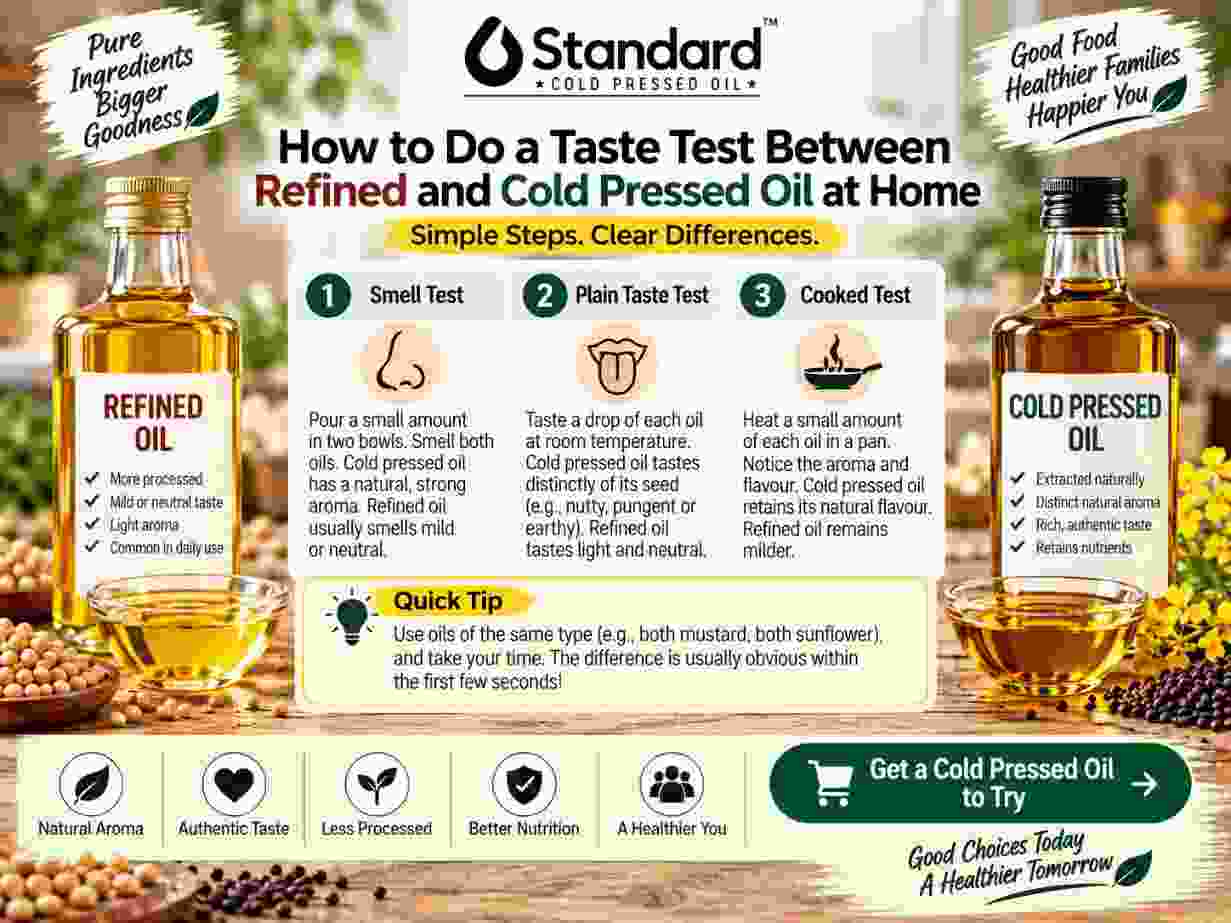
Pour a spoonful each of your usual refined oil and a cold pressed oil of the same type into two small bowls, smell both, then taste both plain, at room temperature. The difference in aroma and flavour is usually obvious within the first ten seconds, refined oil tastes close to neutral, cold pressed oil tastes distinctly of its seed. Do this before you decide whether switching is worth it, rather than taking anyone’s word for it.
At a Glance
- You need two oils of the same type, one refined and one cold pressed, two small bowls or spoons, and ten quiet minutes
- Test in three stages: smell, plain taste, and cooked taste
- Groundnut and mustard oil show the clearest difference for first-time testers
- Cleanse your palate with plain water or a plain cracker between the two oils
- The goal is not to prove one oil is better, it is to notice what you have actually been eating without realising it
Most people who cook with refined oil every day have never actually tasted it on its own. It goes into the pan alongside onions, garlic, and spices, and its own flavour, or lack of it, gets lost in everything else happening in the dish.
A side-by-side taste test removes that noise. It takes ten minutes, costs nothing beyond the oil you likely already have, and tells you more about the difference between refined and cold pressed oil than any article, including this one, can.
Here is how to run it properly.
What You Need
- A refined oil you currently use, whatever is already in your kitchen
- A cold pressed oil of the same type, groundnut against groundnut, mustard against mustard, not two different oils
- Two small bowls or two clean spoons
- Plain water or an unsalted cracker to reset your palate between tastes
Comparing the same type of oil matters more than it might seem. Comparing refined sunflower oil against cold pressed mustard oil tells you about two different seeds, not about what refining does. Keep the seed constant and change only the processing.
Stage One: The Smell Test
Pour a spoonful of each oil into its own bowl. Smell the refined oil first, close to the nose, a short inhale, the way you would smell coffee.
Most refined oils will smell close to nothing, a faint, flat, slightly greasy note at most. This is intentional. Refining specifically targets aroma compounds and removes most of them, which is why refined oil is often described as neutral.
Now smell the cold pressed oil. If it is groundnut, you should get a clear roasted-peanut note. If it is mustard, expect a sharp, pungent smell that may make your eyes water slightly, that is normal and expected. If it is sesame, look for a warm, nutty aroma. If it is coconut, a clean, sweet coconut smell.
Write down, even mentally, what each one smells like before moving to taste. This first impression is usually the clearest difference of the whole test.
Stage Two: The Plain Taste Test
Dip a clean spoon or your fingertip into the refined oil and taste a small amount, just enough to coat your tongue.
Refined oil typically tastes close to nothing, a mild, greasy sensation without much flavour attached to it. This is often the moment people realise they have never actually noticed what their regular cooking oil tastes like, because it was never designed to be tasted on its own.
Rinse your mouth with water or eat a bite of plain cracker, then taste the cold pressed oil the same way. The difference is usually immediate. Groundnut oil should taste mildly sweet and nutty. Mustard oil will have a sharp bite that builds at the back of the throat, this is the plant compound allyl isothiocyanate, the same one responsible for the smell. Sesame oil should taste warm and slightly toasty even unheated. Coconut oil should taste clean and distinctly of coconut.
If you cannot tell the two oils apart by taste alone, that is worth noting too, it usually means the “cold pressed” oil being tested has been heavily filtered or is not genuinely unrefined.
Stage Three: The Cooked Test
Some differences only show up once heat is involved. For this stage, cook the same simple dish twice, once in each oil, ideally something plain enough that the oil’s flavour is not overwhelmed.
- Plain tempered rice or a simple tadka on dal works well
- Fried potatoes or a plain omelette also show the difference clearly
- Avoid dishes loaded with strong spices for this specific test, save those comparisons for later
Cooked cold pressed oil usually shows a rounder, more developed flavour than its raw form, heat mellows the sharper notes into something deeper. Refined oil, cooked or raw, tends to stay close to flavourless, doing its job as a cooking medium without contributing much of its own character to the dish.
What People Usually Notice
Across repeated versions of this test, a few reactions come up consistently.
- Surprise at how little flavour refined oil actually has, once it is tasted deliberately rather than as part of a full dish
- First-time tasters of raw mustard oil often find it too intense on its own, which is expected, it is designed to be used in small amounts within a dish, not tasted alone
- Groundnut oil tends to be the easiest entry point for people new to cold pressed oil, since its flavour is noticeable but mild
What This Test Does Not Tell You
A taste test tells you about flavour and aroma, which is real and immediate, but it does not measure nutrition, shelf life, or cooking performance on its own. Those are separate questions worth researching alongside this one, not conclusions to draw from a single tasting session.
| Want to run this test yourself? Our cold pressed oils are pressed the traditional way, with nothing added and nothing stripped out. |
Related Reading
- Cold Pressed vs Refined Oil: What Actually Changes in the Process
- Is Cold Pressed Oil Worth the Higher Price? An Honest Look
- 10 Common Mistakes People Make When Switching to Cold Pressed Oil
Frequently Asked Questions
Which oil shows the clearest difference for a first taste test?
Groundnut and mustard oil tend to show the most obvious contrast between refined and cold pressed versions. Groundnut is a gentler introduction, mustard is more dramatic and immediate.
Can I do this test with oils from different brands, or does it need to be the same brand?
The brand matters less than the type of processing. Any genuinely refined oil compared against any genuinely cold pressed oil of the same seed type will show the same general pattern, since the difference comes from the extraction method, not the brand.
Why does my cold pressed oil taste different from one bottle to the next?
Cold pressed oil retains more of the natural variation that exists in agricultural produce, similar to how coffee or wine can taste slightly different by harvest and batch. Refined oil is processed specifically to remove this variation and taste uniform every time.
Is it normal for cold pressed oil to taste stronger than I expected?
Yes, especially for mustard and sesame oil. Most people’s palates are calibrated to refined oil’s neutrality, so any oil with genuine flavour can taste unexpectedly strong at first. This usually adjusts within a few weeks of regular cooking.
Should I trust my own taste test over what a label claims?
Your own senses are a reliable and immediate check on what a bottle actually contains. If a product labelled cold pressed tastes and smells close to neutral, similar to refined oil, that is worth questioning alongside checking the label’s ingredient list and any processing claims.
