


Quick Answer
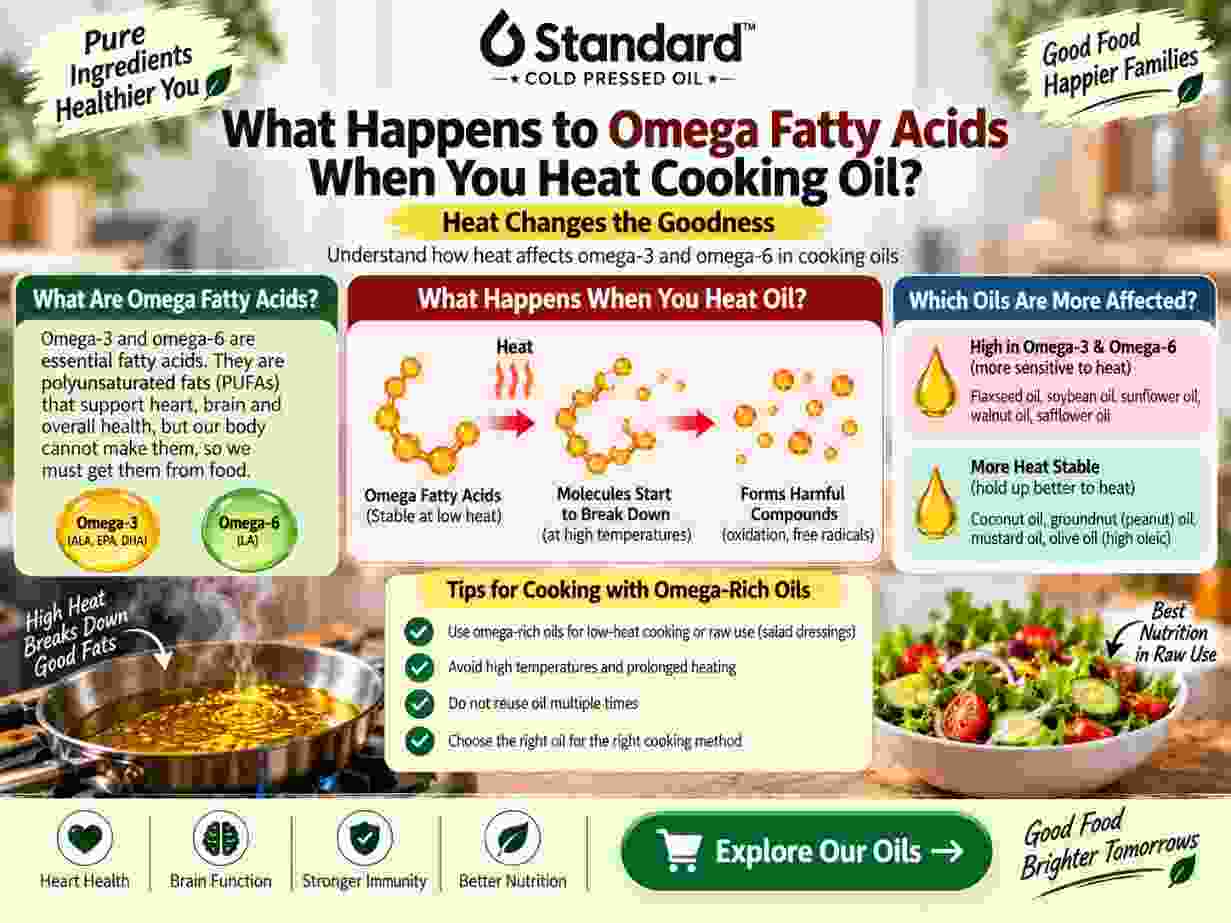
Omega-3 and omega-6 fatty acids are polyunsaturated, meaning their molecular structure has multiple weak points that break down under heat, especially at high temperatures over long periods or when oil is reused. Saturated and monounsaturated fats, found in coconut and groundnut oil, hold up far better to heat. Match the oil to the cooking method: save polyunsaturated-rich oils for lower heat or raw use, and save the more heat-stable oils for frying.
At a Glance
- Fatty acids come in three types: saturated, monounsaturated, and polyunsaturated, based on their chemical bonds
- More double bonds means less heat stability, polyunsaturated fats degrade fastest, saturated fats are the most heat-stable
- Omega-3 (three double bonds) breaks down faster under heat than omega-6 (two double bonds)
- Groundnut and coconut oil, higher in monounsaturated and saturated fat, suit higher-heat cooking better
- Reheating or reusing oil multiple times accelerates this breakdown regardless of which oil you use
Every cooking oil is a mixture of different fatty acids, and it is that mixture, more than any single number on a label, that decides how well an oil handles heat.
This matters because the popular advice to eat more omega-3 and omega-6 fats usually assumes those fats reach your plate intact. Heat changes that assumption. Understanding what actually happens to these fatty acids in a hot pan helps you choose the right oil for the right job, rather than treating every bottle in your kitchen the same way.
The Three Types of Fatty Acid, Briefly
Every fat molecule is a chain of carbon atoms. What differs between fats is how many double bonds sit along that chain, and double bonds are the weak points where oxidation and heat damage happen.
- Saturated fatty acids have no double bonds. They are the most stable under heat. Coconut oil and ghee are mostly saturated fat.
- Monounsaturated fatty acids have one double bond. They are moderately stable. Oleic acid, the main fat in groundnut oil, falls here.
- Polyunsaturated fatty acids have two or more double bonds. They are the least heat-stable. Omega-6 (linoleic acid) has two double bonds. Omega-3 (alpha-linolenic acid) has three.
The more double bonds a fatty acid has, the more places it has for oxygen to attack when the oil is heated, which is the chemical basis of everything that follows.
What “Heat Damage” Actually Means
When a polyunsaturated fat is heated, especially past its smoke point or for an extended time, the double bonds react with oxygen and begin to break apart. This produces a range of breakdown products, including aldehydes, some of which are associated with unwanted flavours (staleness, bitterness) and are the subject of ongoing food science research into their effects when consumed repeatedly over time.
This is not unique to any one oil brand or type. It is a property of the fatty acid itself. Any oil high in polyunsaturated fat will show this behaviour under high heat, whether it is cold pressed or refined, imported or local.
Refining does change one part of this picture: it removes many of the natural antioxidants, like tocopherols, that would otherwise offer the oil some protection against this breakdown. So a refined polyunsaturated oil can, in some respects, degrade faster under heat than an unrefined one with more of its natural antioxidants intact, even though the underlying fatty acid chemistry is the same.
Omega-3 vs Omega-6 Under Heat
Between the two, omega-3 fatty acids are more heat-sensitive than omega-6, simply because they have one more double bond to react with oxygen.
This is a reason oils particularly rich in omega-3, like flaxseed oil, are almost always recommended for raw use, drizzled over a finished dish or blended into a dressing, rather than used for cooking at all. Mustard oil contains a moderate amount of omega-3 alongside its more dominant monounsaturated and omega-6 content, which is part of why traditional use favours moderate heat for tempering rather than prolonged deep frying.
The oil best suited for deep frying is rarely the oil best suited for a salad dressing, and that difference comes down to fatty acid chemistry, not marketing.
Matching Oil to Cooking Method
| Cooking Method | Better Suited Oils | Why |
|---|---|---|
| Deep frying, high sustained heat | Groundnut, coconut | Higher in monounsaturated and saturated fat, more stable across long, hot cooking |
| Everyday tempering and sautéing | Mustard, groundnut, sesame | Moderate heat, shorter duration, well within these oils’ stable range |
| Raw use: dressings, drizzling, finishing | Sesame, mustard, coconut | No heat exposure at all, so the full fatty acid profile reaches the plate unchanged |
Practical Habits That Matter More Than the Oil You Choose
Even the most heat-stable oil degrades faster with certain habits, and even a less heat-stable oil holds up reasonably well if these are avoided.
- Avoid letting oil sit at high heat for longer than the recipe needs, once food is cooked, take the pan off the heat
- Reusing frying oil multiple times compounds the damage each time it is reheated, this matters more than the oil type itself for deep frying
- Do not let oil visibly smoke, smoking is a sign the oil has passed its stable temperature range
- Store oil properly between uses, since oxidation continues in the bottle too, not only in the pan
Why This Is Not a Reason to Avoid Any Particular Oil
None of this means polyunsaturated fats or the oils that contain them should be avoided. It means they are better suited to certain uses than others. Mustard and sesame oil bring flavour, tradition, and a fatty acid profile worth having on your plate, especially when used raw or at moderate heat the way they traditionally have been. The point of understanding this chemistry is choosing the right oil for the right dish, not eliminating any oil from the kitchen.
| Our range spans oils suited to every cooking style, from high-heat groundnut and coconut to raw-use mustard and sesame. |
Related Reading
- How Cold Pressing Preserves Vitamin E in Oils (And Why Refining Removes It)?
- Why the Oil Extraction Method Affects What You Are Actually Eating
- Smoke Points of Common Cooking Oils: What They Actually Mean for Your Kitchen
Frequently Asked Questions
Does heating oil destroy all of its nutritional value?
No, but it does degrade some heat-sensitive components, particularly polyunsaturated fatty acids and certain vitamins like Vitamin E. Saturated and monounsaturated fats hold up much better, which is one reason different oils are recommended for different cooking methods.
Is mustard oil safe to use for deep frying?
Mustard oil’s smoke point, around 250°C, is high enough for home deep frying, and it is traditionally used this way for items like pakoras and puris. For very prolonged or repeated deep frying, groundnut or coconut oil’s fatty acid profile makes them somewhat more heat-stable choices.
Which cold pressed oil has the most omega-3?
Among the oils commonly used in Indian kitchens, mustard oil has a comparatively higher omega-3 content than groundnut, sesame, or coconut oil, though it is not as concentrated a source as flaxseed oil.
Should I avoid reusing oil after deep frying?
Repeated reheating accelerates the breakdown of fatty acids and builds up oxidation byproducts with each use. If you do reuse frying oil, strain it well, store it properly, and avoid reheating it more than once or twice.
Does cold pressed oil have more omega-3 and omega-6 than refined oil of the same type?
The core fatty acid content is largely determined by the seed itself and stays similar between cold pressed and refined versions of the same oil. What differs more is the natural antioxidant content, which refining tends to strip out, and which offers the polyunsaturated fats some protection against oxidation.
