



| Quick Answer
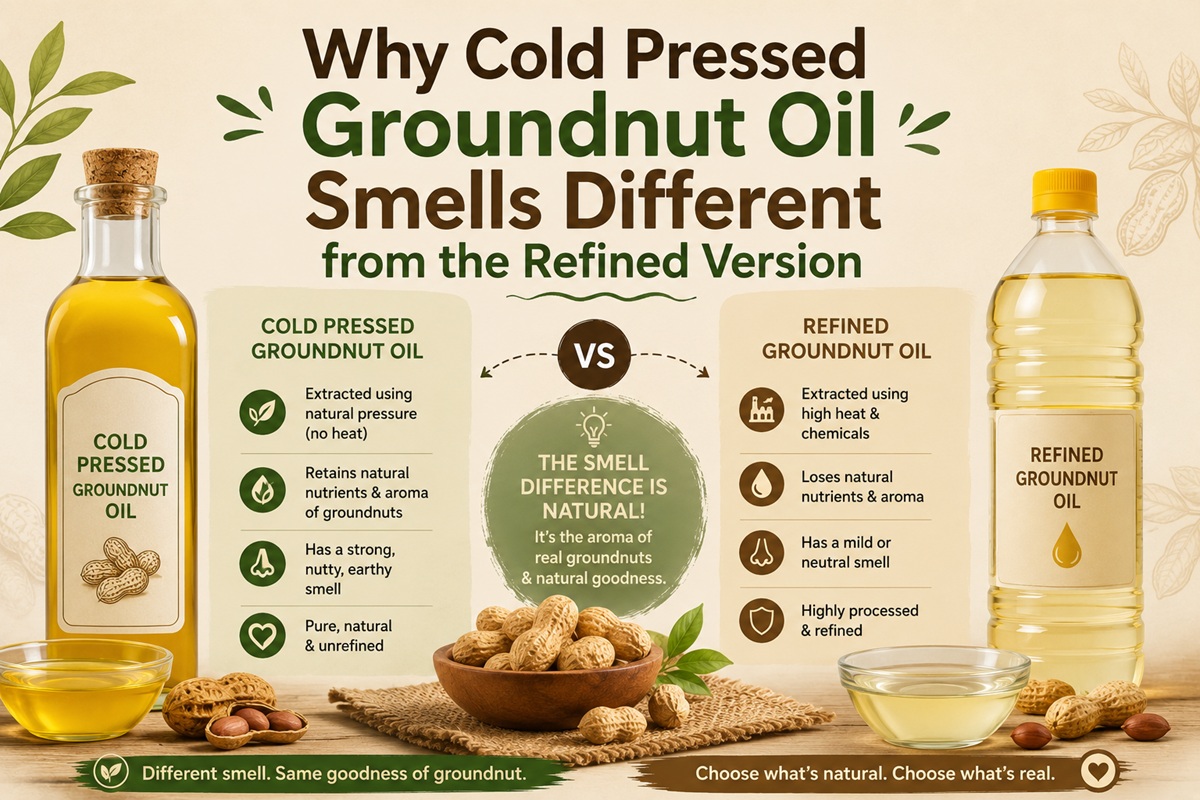
Cold pressed groundnut oil smells of roasted peanuts because it retains the natural volatile aromatic compounds that refined oil loses during deodorisation at 200 to 270 degrees Celsius. The smell is not an impurity. It is confirmation that the oil is genuinely cold pressed and that its natural composition is intact. Refined groundnut oil is deliberately made odourless. |
At a Glance
|
If you have opened a bottle of cold pressed groundnut oil for the first time and found the smell stronger than you expected, this is the correct response.
The roasted peanut aroma is not a sign that something is wrong with the oil. It is a sign that the oil has not been deodorised. Understanding why refined oil has no smell, and what the deodorisation process removes, makes the cold pressed oil’s aroma immediately reassuring rather than surprising.
What Creates the Aroma in Cold Pressed Groundnut Oil
Raw peanuts contain hundreds of volatile organic compounds. When peanuts are processed, including the mechanical action of cold pressing, some of these compounds are released into the oil along with the fatty acids.
The most characteristic aroma compounds in peanuts belong to several chemical families. Pyrazines, particularly methylpyrazine and dimethylpyrazines, are responsible for the roasted, nutty character that makes peanuts immediately recognisable. These form during the Maillard reaction when amino acids and reducing sugars interact, even at the relatively low temperatures involved in raw peanut processing and pressing.
Natural fatty acid esters contribute fruity and green notes. Aldehydes from the oxidation of fatty acids add complexity. The combined profile of these volatile compounds is what your nose detects when you open a bottle of genuine cold pressed groundnut oil.
These compounds survive cold pressing because the temperature stays below 45 degrees Celsius throughout extraction. They would not survive the deodorisation step that refined oil undergoes.
What Deodorisation Does
Deodorisation is the final major step in oil refining and the one most responsible for the sensory difference between refined and cold pressed oil.
In deodorisation, oil is treated with high-temperature steam in a vacuum chamber at temperatures between 200 and 270 degrees Celsius. The purpose is to strip every volatile compound from the oil that could produce a detectable smell or flavour.
At these temperatures, all the pyrazines, esters, aldehydes, and other aromatic compounds that give cold pressed groundnut oil its peanut character are removed. What remains is a nearly pure triglyceride mixture with no detectable aroma or flavour.
This is intentional. Commercial oil production needs consistent, neutral products that can be used across a wide range of applications without their flavour affecting the final product. The deodorisation step serves that commercial purpose effectively.
It does not serve the purpose of a household cook who wants an oil that contributes to the flavour of their food.
The Smell When Cooking: What to Expect
The first time you heat cold pressed groundnut oil in a pan, the kitchen smells different from what you are used to.
At moderate temperatures, around 130 to 150 degrees Celsius where most tempering happens, the volatile compounds in the oil become more active. The peanut aroma intensifies briefly, then mellows as the oil heats through and some of the lighter volatile compounds disperse.
This is the correct sequence. The smell in the pan when cooking with cold pressed groundnut oil is the smell of real food starting. The tadka you make in this oil will smell more complex than the same tadka made in refined sunflower. The curry base will have more background warmth.
The raw smell from the bottle is stronger than the cooking smell, which surprises many first-time users in the opposite direction from what they expected. They open the bottle, think the smell is too strong, and then find that cooking with it produces a result that smells and tastes better than refined oil without being overwhelming.
| Give the smell one week of cooking. By the end of the first week, the roasted peanut aroma from the bottle will have become associated with food that tastes right. The association shifts quickly. |
When the Smell Indicates a Problem
The smell that should cause concern is not peanut. It is metallic, sour, crayon-like, or reminiscent of paint or nail polish remover. These are the volatile aldehydes and ketones produced by lipid oxidation, which is what rancidity smells like.
Fresh cold pressed groundnut oil smells of roasted peanuts. Rancid cold pressed groundnut oil smells metallic and unpleasant. These are completely different and easily distinguishable.
If you open a bottle of cold pressed groundnut oil and get a clean peanut smell, the oil is fresh and correct. If you get a metallic or sour smell, the oil has oxidised and should be discarded.
Managing the Transition
For households accustomed to the neutral smell of refined oil, the peanut aroma of cold pressed groundnut oil requires a brief adjustment period. This is the most commonly reported experience of first-time cold pressed oil users.
The adjustment is almost always faster than people expect. Within one to two weeks of cooking regularly with cold pressed groundnut oil, the peanut aroma becomes the normal baseline. Refined oil then smells of nothing, which after the comparison feels like the oil is missing something.
This recalibration of smell expectations is a normal sensory adaptation. It reflects accurately what is present in each oil: one has natural aromatic compounds, one does not.
The Smell During Different Cooking Applications
Understanding how cold pressed groundnut oil’s aroma behaves across different cooking applications helps set expectations accurately.
In tadka at 130 to 160 degrees Celsius, the aroma is warm and present, enriching the spices as they bloom. The kitchen smells like real food is being cooked.
In sauteing and curry base preparation, the oil’s aromatic contribution is more subtle. It creates a background warmth that refined oil does not produce, noticeable if you compare directly but not dominant in a well-spiced preparation.
In deep frying at 165 to 175 degrees Celsius, the aroma diminishes as the most volatile compounds dissipate under sustained heat. The fried food carries less distinctive oil character, though the natural tocopherol content continues to protect the oil’s stability during the frying session.
In raw applications, salad dressings and marinades, the full aroma is present and active. Cold pressed groundnut oil in a raw dressing has a clear peanut character that works well in South Asian-style preparations and adds an interesting dimension to mixed dressings.
Identifying Genuine Cold Pressed Groundnut Oil
The markers of genuine cold pressed groundnut oil are consistent and easy to verify before purchase.Colour should be deep golden to amber. The natural carotenoids and other pigments of the peanut survive cold pressing. Bleaching during refining removes them. A pale or water-clear oil labelled cold pressed groundnut is not a reliable product.
Opening the bottle should produce immediate, clear peanut aroma. The smell should be clean and roasted, not metallic or sour. No smell at all means the oil has been deodorised.
The best-before date should be 12 to 18 months from manufacture for genuinely cold pressed oil without synthetic preservatives. A best-before date of 24 months or more suggests either added preservatives or an unreliable cold pressed claim.
The ingredients list should show one item only: groundnut oil. TBHQ on the list is a refining indicator.
First Week with Cold Pressed Groundnut Oil
Most households report the same first week experience. The smell from the bottle is initially surprising. The tadka smells different in the pan, in a good direction. Food starts to taste like it has been cooked in something rather than just transmitted heat.
By the end of the first week, the peanut aroma from the bottle has become associated with good food rather than an unfamiliar product. The association shifts faster than most people expect. Within two weeks, the comparison with refined oil is striking: refined oil smells like nothing, and food cooked in it tastes correspondingly flat.
This recalibration is not placebo. The natural aromatic compounds in cold pressed groundnut oil are chemically active during cooking. They interact with spices in the tadka. They create a flavour background in the curry base. The taste difference is real, measurable in a direct comparison, and apparent to most people within the first cooking session.
| Our cold pressed groundnut oil smells of peanuts because nothing was taken from it. This is what the seed actually produces when pressed correctly. |
Frequently Asked Questions
Why does cold pressed groundnut oil smell so strong?
Cold pressed groundnut oil retains natural volatile aromatic compounds, particularly pyrazines and fatty acid esters from the peanut. Refined oil has these compounds removed during deodorisation at 200 to 270 degrees Celsius. The strong smell of cold pressed oil is confirmation of what was not removed, not evidence of something wrong.
Is the smell of cold pressed oil normal?
Yes. A roasted peanut smell from cold pressed groundnut oil is completely normal and expected. It indicates that the oil is genuinely cold pressed and its natural composition is intact. The smell should be clean and peanut-like, not metallic or sour. Metallic or sour smells indicate rancidity, which is a different issue entirely.
Does cold pressed oil smell when you cook with it?
Yes, and the kitchen will smell noticeably better for it. Cold pressed groundnut oil produces a warm, nutty aroma when heated that refined oil does not. The smell is less intense during cooking than from the raw bottle, and it contributes to the overall flavour impression of the finished dish.
How do I know if cold pressed oil has gone bad?
Rancid oil smells metallic, sour, crayon-like, or like nail polish remover. This is completely different from the clean peanut smell of fresh cold pressed oil. If your oil smells of peanuts when you open it, it is fresh. If it smells metallic or unpleasant, discard it.
