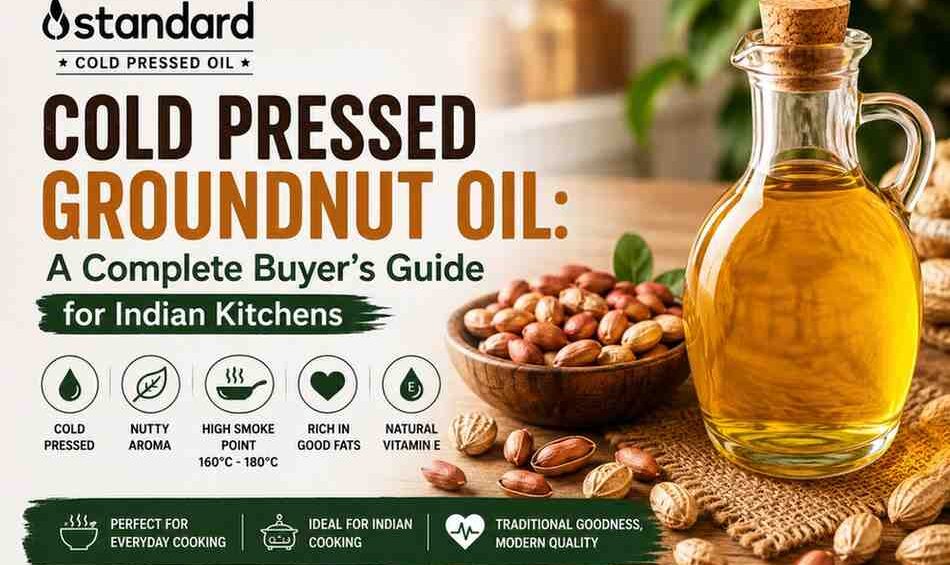
Quick Answer Cold pressed groundnut oil is deep golden, nutty in aroma, and suitable for…



Choosing the best oil for your cooking in the supermarket can feel like a mental jigsaw puzzle! What type of oil works for deep frying samosas? Does it work for steamed soy veggies, too? Can you use the same oil for seasoning tuna salad? No!
There are several important factors to consider when selecting cooking oil: smoke points, storage methods, flavor profiles, cooking techniques, and health benefits. Can you simply ignore all of them and choose the oil with the biggest discount? Absolutely not!
If these questions sound familiar, you are in the right place! In this guide, we will explain smoke points, proper oil storage, and help you choose the best oil for every cooking method.
The smoke point is the temperature at which oil starts breaking down and produces smoke. Once oil crosses this temperature, it loses nutrients, develops a burnt flavor, and may release harmful compounds.
Different cooking methods require different smoke points:
Overheating oil beyond its smoke point can release harmful free radicals. These compounds may increase health risks and also affect the taste and quality of your food.
Burnt oil may create:
Always avoid repeatedly overheating cooking oil.
Different oils have different shelf lives. Some oils oxidize faster when exposed to heat, sunlight, or air.
To keep your oils fresh:
Almost all cooking oils contain around 120 calories per tablespoon. However, each oil differs in fat composition, nutrients, antioxidants, and health benefits.
Choosing the right oil depends on your cooking method and health goals.
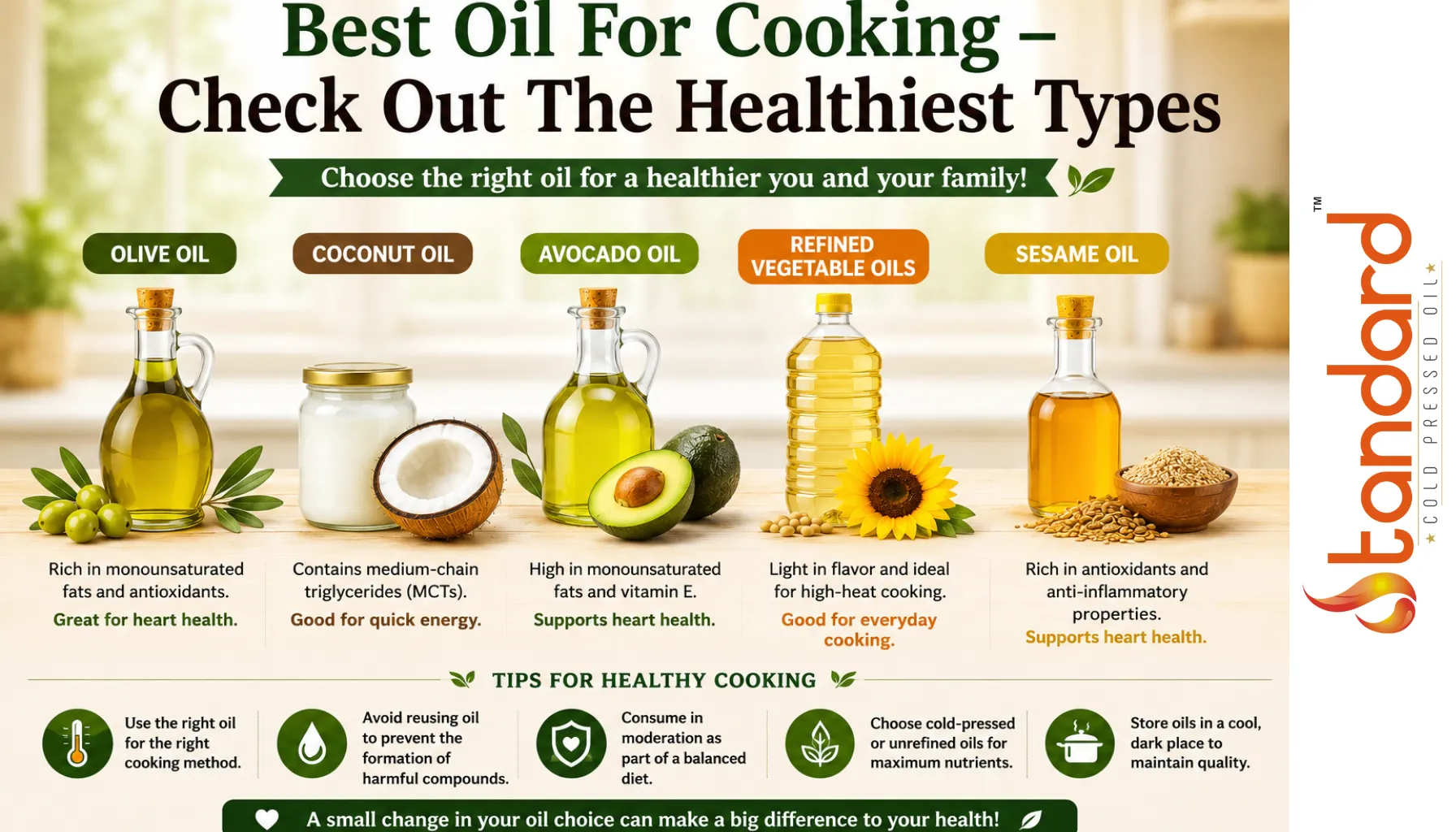
Olive oil is one of the healthiest cooking oils available. It is a major component of the Mediterranean diet and is rich in antioxidants and heart-friendly monounsaturated fats.
Olive oil adds excellent texture and flavor to vegetables, salads, and healthy recipes.
Coconut oil contains medium-chain triglycerides (MCTs) and is widely used in traditional cooking and baking.
Virgin coconut oil is commonly used for deep frying because it maintains food quality well at moderate temperatures.
Avocado oil has one of the highest smoke points among cooking oils, making it excellent for high-heat cooking.
Avocado oil is suitable for both refined high-heat cooking and fresh salad dressings.
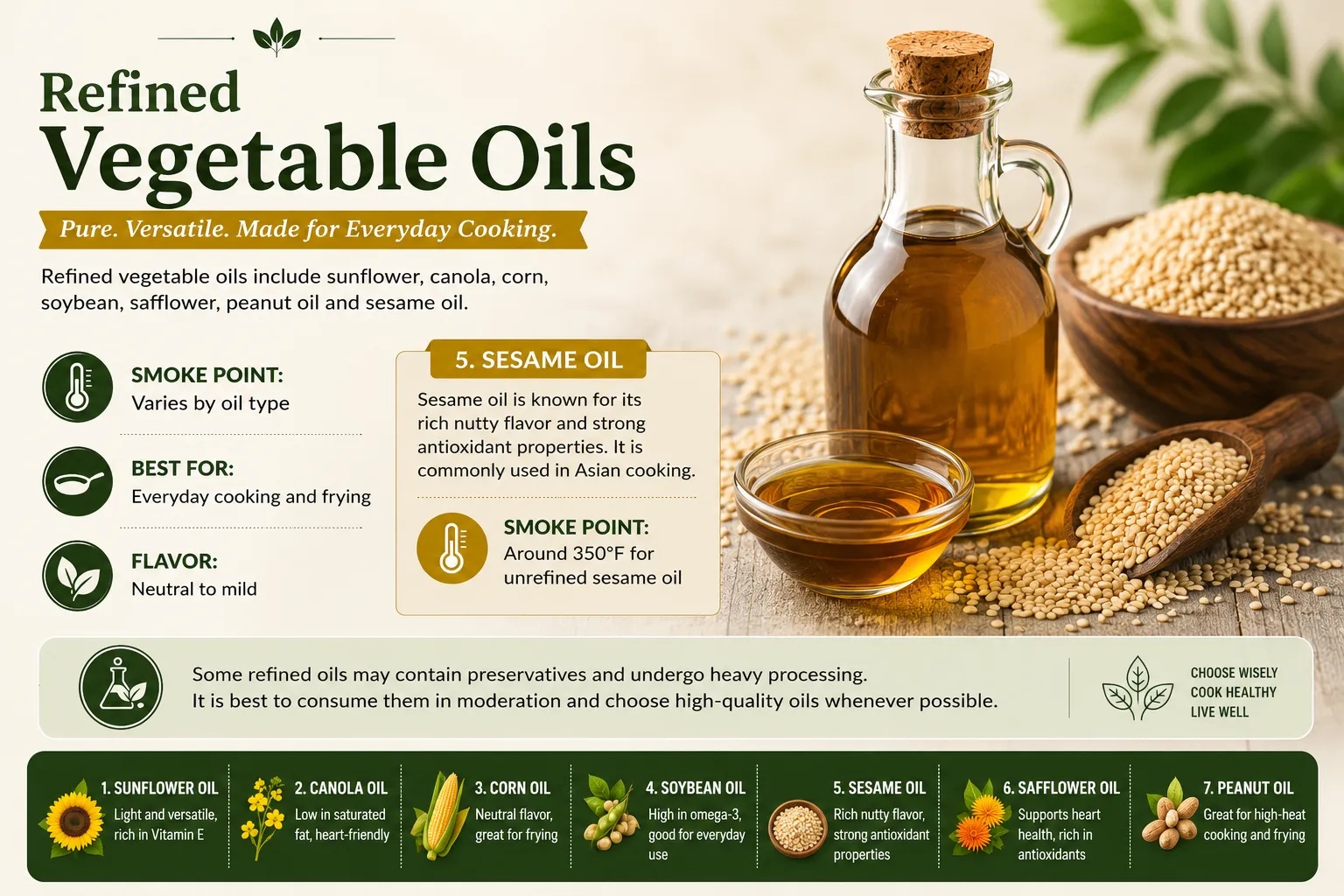
Refined vegetable oils include sunflower, canola, corn, soybean, safflower, and peanut oil.
Some refined oils may contain preservatives and undergo heavy processing. It is best to consume them in moderation and choose high-quality oils whenever possible.
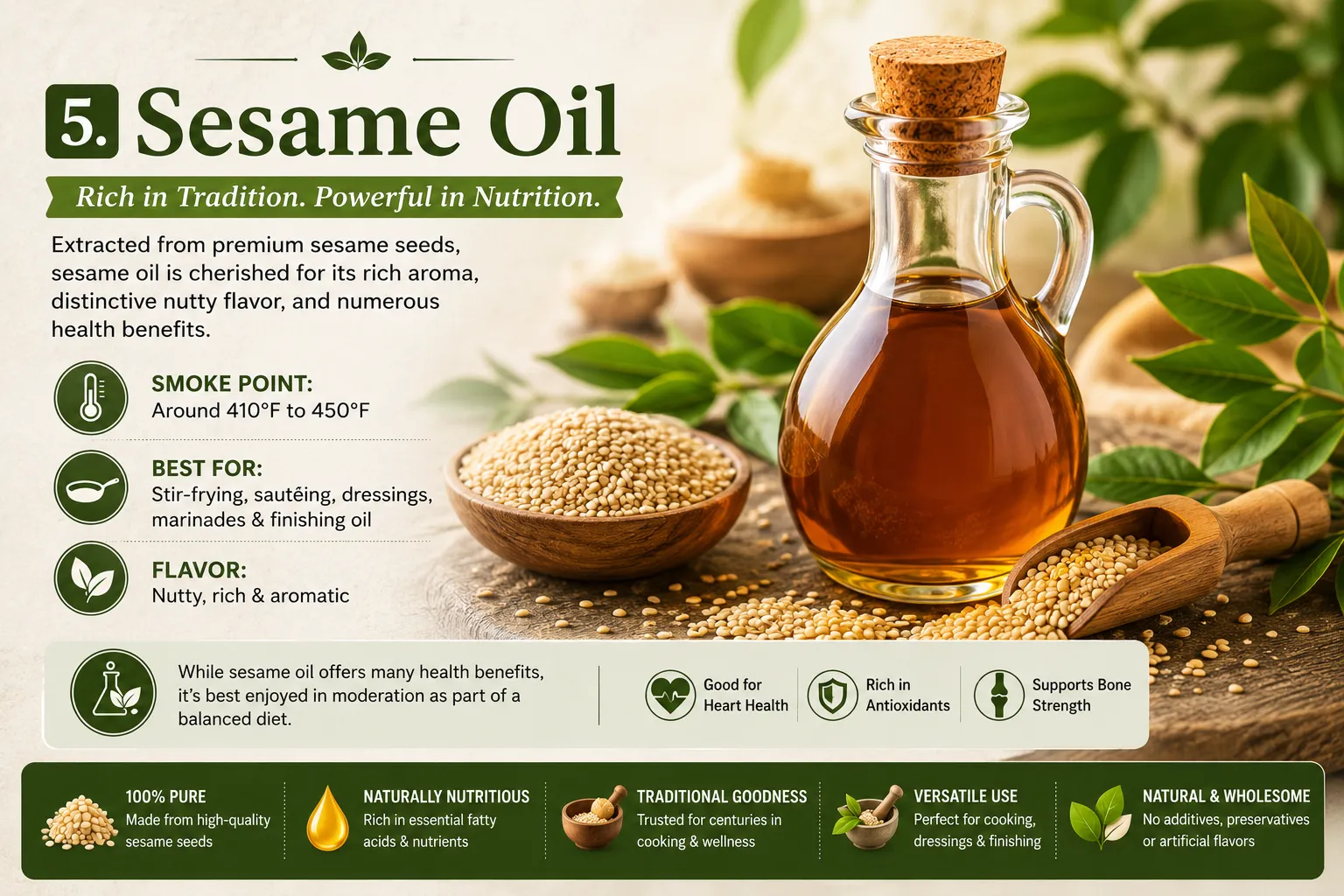
Sesame oil is known for its rich nutty flavor and strong antioxidant properties. It is commonly used in Asian cooking.
Sesame oil pairs perfectly with vegetables, tofu, beef, and flavorful marinades.
Choosing the right cooking oil is not just about taste — it directly affects your health, nutrition, and cooking results.
Understanding smoke points, cooking methods, and storage techniques can help you make smarter kitchen choices every day.
A small change in your oil selection can make a big difference to your overall health!