



Save ₹11
(Incl. GST)




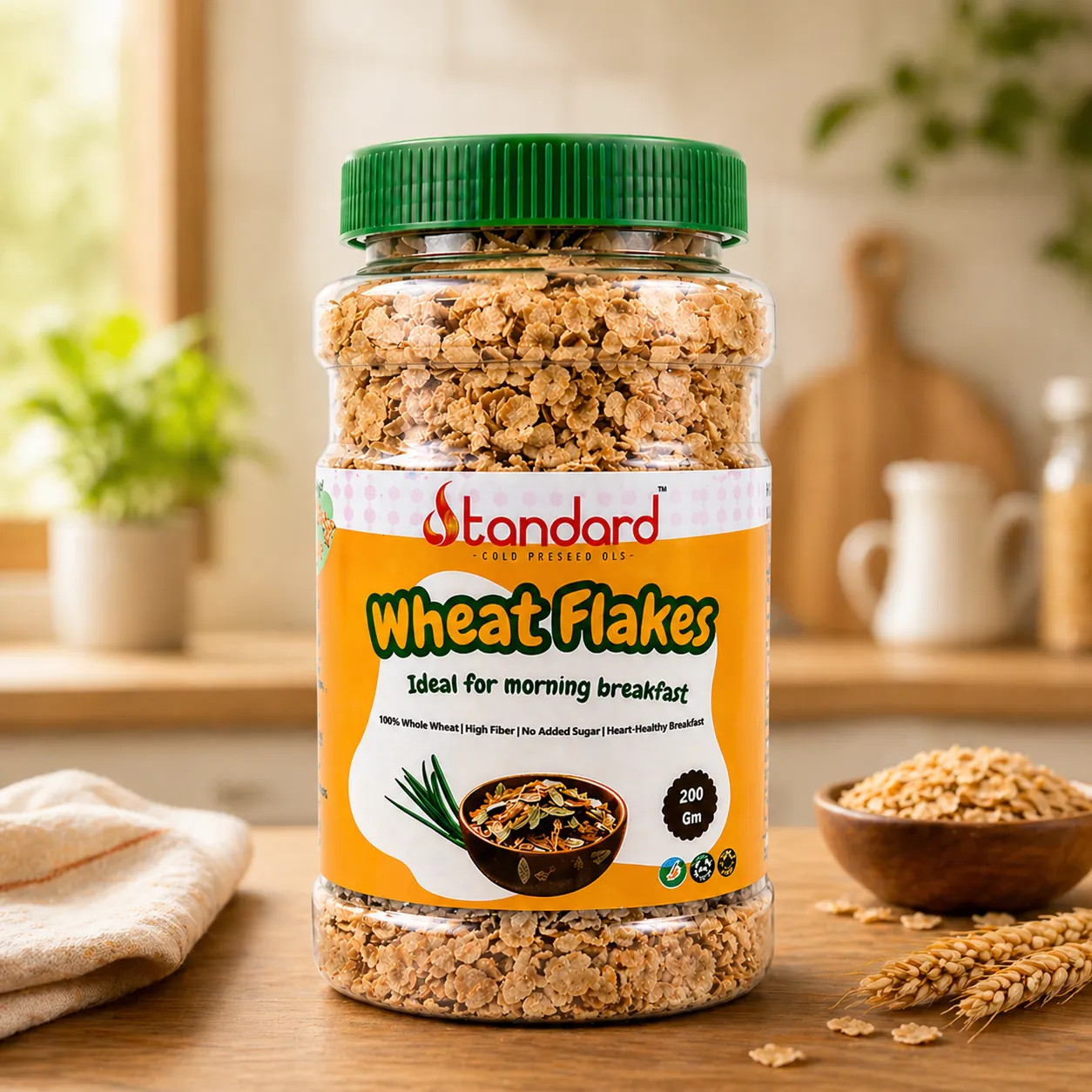
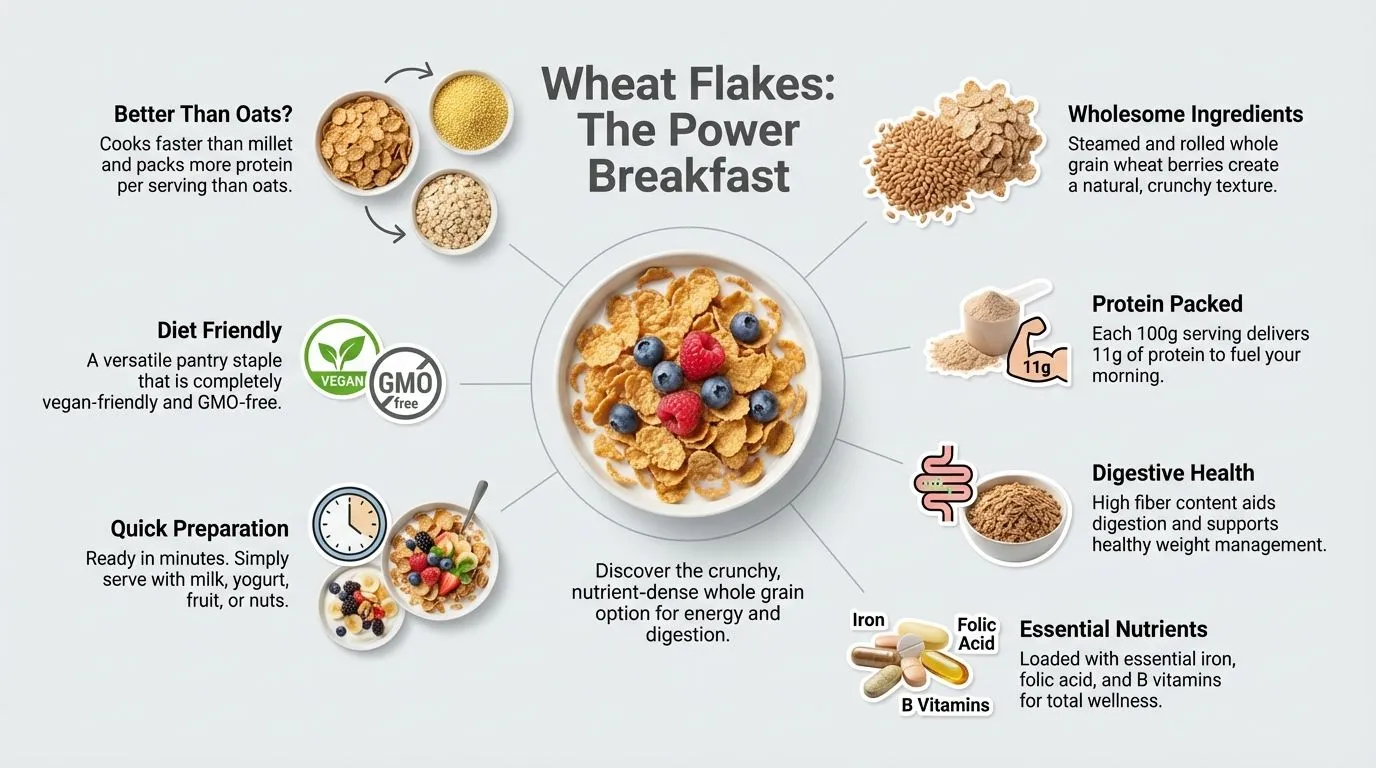
Moving from breakfast basics, wheat flakes stand out as a crunchy and healthy cereal made from whole grain wheat berries. Manufacturers steam and roll these grains using special machinery, similar to the process for corn flakes.
This method keeps the wheat flakes crisp while preserving key nutrients.
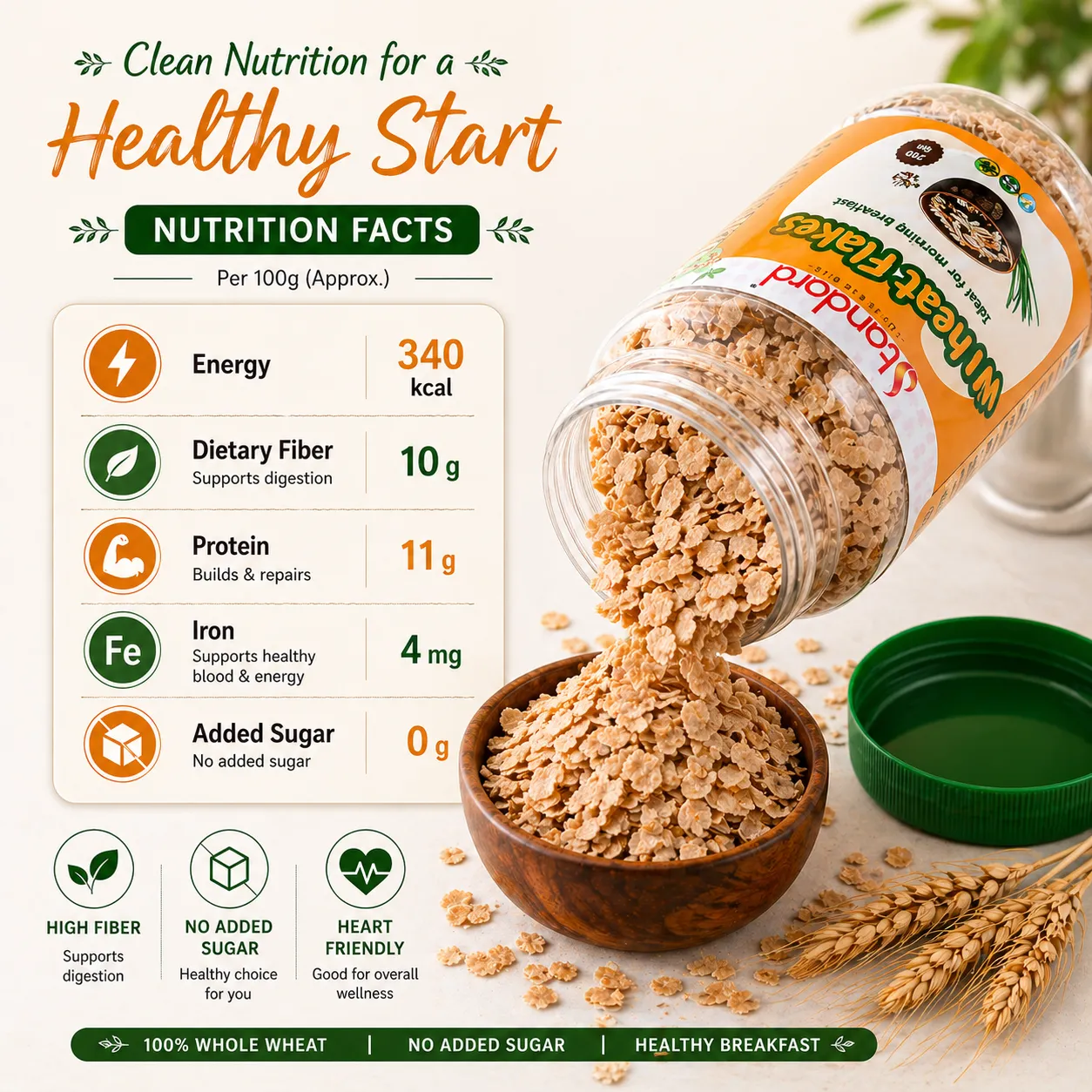
A 100-gram serving delivers 340 kcal, 11 grams of protein, 61 grams of carbohydrates, and just 2.6 grams of fats. Wheat flakes offer high fiber content that supports digestion and weight management while providing essential vitamins like B vitamins and folic acid.
They also contain iron for better nutrition. GMO-free and vegan-friendly, wheat flakes make an easy breakfast or snack when served with milk, fruits, or nuts for extra flavor and crunch.
Quick cooking time appeals to anyone seeking a fast yet nutritious meal option each morning.
Wheat flakes give you nutrition with every crunchy bite. Eating them helps you get more healthy grains each day.
Wheat flakes offer a significant source of dietary fiber. This high fiber content supports digestion and aids in weight management. One hundred grams of wheat flakes contain 61 grams of carbohydrates, most of which come from its fibrous components.
Including wheat flakes in meals can help individuals feel full longer, reducing the urge to snack excessively.
Fiber plays an essential role in promoting overall health. It helps lower the risk of certain health conditions like heart disease and diabetes. By incorporating this crunchy breakfast option into daily routines, people can enjoy both tasty nutrition and beneficial health advantages.
Wheat flakes are GMO-free and suitable for vegans, making them a versatile addition to any diet focused on healthy eating.
High fiber content in wheat flakes supports digestion and weight management. They also provide essential vitamins and minerals, contributing to overall health. These flakes contain iron, B vitamins, and folic acid.
Consuming 100 grams of wheat flakes delivers a significant amount of these nutrients while keeping calorie intake moderate at 340 kcal. This makes wheat flakes an excellent choice for those pursuing nutrition alongside taste.
With their rich nutrient profile, they offer a convenient way to enhance daily vitamin and mineral intake.
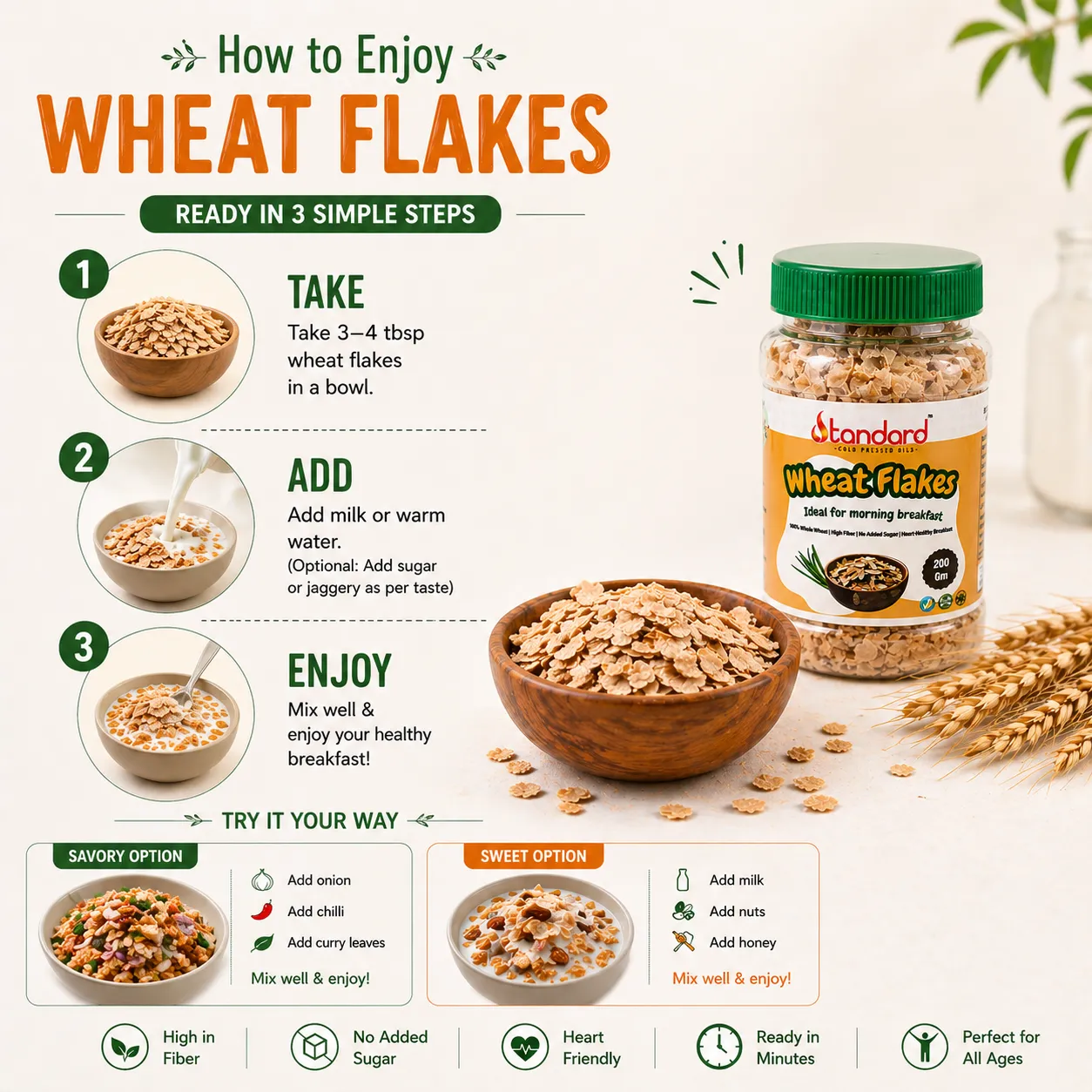
Wheat flakes make a delicious addition to any breakfast. Individuals can enjoy them with milk for a quick meal. Including fruits or nuts enhances flavor and nutrition. This combination packs extra vitamins and minerals into every bowl.
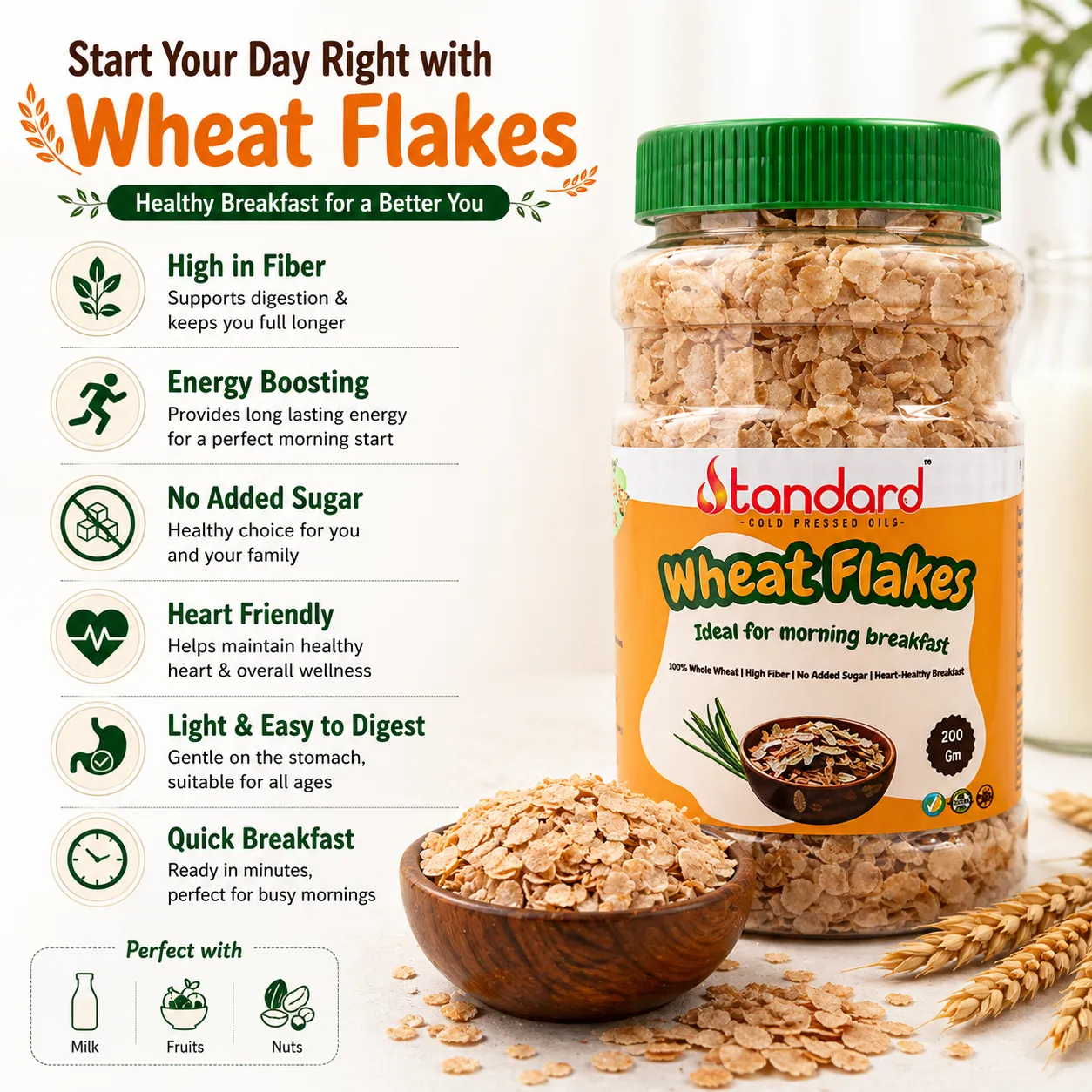
These toasted wheat flakes cook quickly, making them ideal for busy mornings. With 100 grams containing 340 kcal, they provide ample energy to start the day right. High in fiber, they support digestion and help manage weight effectively.
Including these flakes can lead to healthier eating habits. Next, the key nutritional benefits of wheat flakes will be explored.
Wheat flakes, oats, and millet each offer unique benefits. Wheat flakes provide high fiber content that supports digestion and weight management. They contain 340 kcal per 100 grams along with 11.0 grams of protein and essential vitamins like iron and B vitamins.
In contrast, oats are also high in fiber but rank lower in protein compared to wheat flakes.
Millet serves as a gluten-free alternative rich in minerals but lacks the same fiber levels found in wheat flakes. Both oats and millet take longer to cook than wheat flakes, which cook quickly for busy mornings.
Readers can easily choose between these options based on their nutritional needs and meal preferences next under nutritional benefits of wheat flakes.
Wheat flakes offer a convenient, nutritious option for breakfast. They pack a punch with high fiber and essential vitamins. These flakes support healthy digestion and weight management effectively.
Mixing them with milk, fruit, or nuts makes for a simple meal that’s easy to prepare. Incorporating wheat flakes into one’s diet can lead to better health outcomes. For those seeking alternatives, exploring options like oats or millet might be worthwhile too.
Wheat flakes are a nutritious breakfast option made from processed whole wheat grains. They provide fiber, vitamins, and minerals.
Preparing wheat flakes is simple. Just add hot or cold milk, yogurt, or water to them. You can also mix in fruits or nuts for added flavor.
Yes, eating wheat flakes offers several health benefits. They support digestion due to their high fiber content and help maintain energy levels throughout the day.
Save ₹11
(Incl. GST)
Save ₹13
(Incl. GST)
Save ₹10
(Incl. GST)
Save ₹14
(Incl. GST)
Save ₹11
(Incl. GST)
 Purchase this item & get